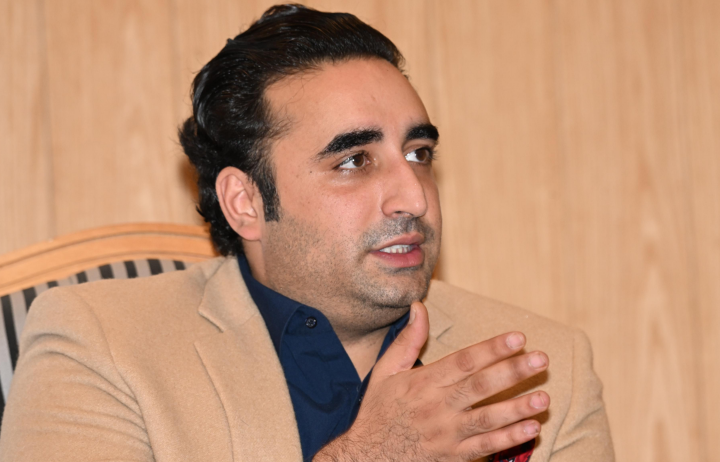
Chairman Bilawal addresses the National Assembly


Chairman Pakistan Peoples Party, Bilawal Bhutto Zardari, in his address at the National Assembly today, strongly condemned the recent terror attacks in the country. He said that whether one sits on the treasury benches or the opposition benches, the entire House and the nation must set aside political differences and unite against the malicious designs of terrorists. The military, politicians, civil society, and the people of Pakistan have defeated these terrorists before and accomplished what the entire world, including NATO forces, could not achieve in Afghanistan. “Pakistan will once again emerge victorious in the battle against terrorism,” Chairman Bilawal Bhutto Zardari affirmed.

Chairman Bilawal stated that his and the entire PPP’s efforts have always been dedicated to building consensus in the legislative process. The 1973 Constitution and the 18th Amendment were both passed through consensus, and the same spirit was upheld during the passage of the 26th Amendment after tireless efforts. He recalled that the PPP had engaged with Maulana Fazlur Rehman, who in turn brought the PTI and SIC into the process. “Not only was Maulana Fazlur Rehman part of the legislative consultations on the constitutional benches, but so was the PTI, despite not having voted,” Chairman Bilawal reiterated. “Maulana Fazlur Rehman cast his vote for the 26th Amendment with the consent of the PTI.”

Chairman PPP further said that the 27th Amendment is an effort to fulfill the promises enshrined in the Charter of Democracy, including the establishment of a Constitutional Court. He added that, following Pakistan’s historic victory over India, the amendment also seeks to grant constitutional protection to the rank of Field Marshal through Article 243. “Certain changes are being introduced in the Constitution relating to defence institutions,” he said. “The true strength of any legislation or amendment lies not in the size of the majority that passes it, but in the depth of the political consensus behind it. The 1973 Constitution remains Pakistan’s undisputed, unanimous Constitution because it was supported by all political parties under the leadership of Quaid-e-Awam Zulfikar Ali Bhutto. That consensus cannot be undone by any dictator or tyrant politician.”

Chairman Bilawal recalled that when the PPP and PML-N came to power after defeating a dictator, they passed the 18th Amendment, a document that brought about fundamental democratic reforms and ensured provincial autonomy. “The 18th Amendment cannot be undone, because it was built on the strength of a broad political consensus,” he said. “It does not only bear the signatures of the PPP and PML-N, but of all political parties. It is, therefore, unfortunate that the amendment we are introducing today does not carry the same level of consensus.”

Chairman PPP shared that he had been contacted by the government regarding the proposed amendment. “If this amendment includes reforms concerning the defence structure, it implies that the government has consulted the relevant institutions,” he said. “Similarly, if it concerns judicial reforms, the government must have consulted judges and lawyers. They approached me in my capacity as Chairman PPP, and I placed the matter before the Party’s Central Executive Committee. After much deliberation, we decided to support the government in completing the mission envisioned in the Charter of Democracy.”

Chairman Bilawal further stated that the Field Marshal and the armed forces of Pakistan are being commended globally for inflicting a historic defeat on Modi’s regime by downing six Indian jets. “We are also witnessing the aftermath of India hosting the foreign minister of Afghanistan on our other border,” he noted. “In this context, the PPP has decided to support the government’s recommendations regarding Article 243.” He said that it would have been far better had the political parties in the Opposition followed suit, instead of raising a hue and cry for their imprisoned leader. He emphasized that he had fulfilled his responsibility, but the onus was also on the Opposition to participate in the committees and provide their input, which they failed to do.

Chairman Pakistan Peoples Party, Bilawal Bhutto Zardari, stated that alongside the establishment of Constitutional Courts, the PPP appreciates the Government of Pakistan for accepting its demand to ensure equal representation of all provinces in the newly formed courts. The federation, he said, would be further strengthened by treating all provinces equally. All political forces opposing the 27th Amendment must acknowledge that this is a historic milestone, as for the first time, every province will have equal representation in the constitutional courts.

He recalled that when Quaid-e-Awam Shaheed Zulfikar Ali Bhutto was judicially murdered, the bench lacked equal provincial representation, a flaw that shook the very foundation of the federation. “We continue to suffer from the consequences of that injustice,” he said. “Those who speak of provincial equality, be it Mr. Achakzai or others, must recognize and appreciate this remarkable achievement that ensures true equality among the provinces.”

He further remarked that after the tenure of former Chief Justice Iftikhar Chaudhry, all political parties , including the PPP and PML-N, suffered from the unchecked use of suo motu powers. “We witnessed courts setting the prices of tomatoes and potatoes, making dams, and even disrespecting prime ministers, ministers and elected representatives,” he said. There will be no suo motu powers after this Amendment, and the Sword of Damocles that the courts have long held over prime ministers and governments will finally cease to exist.

Chairman Bilawal said that there are still several points of the COD that need to be implemented in order to overcome the crises the country faces today. He emphasized the need to move towards Truth and Reconciliation, and to adopt a path that reaffirms that this country belongs equally to Shehbaz Sharif, Achakzai, and Imran Khan, as much as it does to every other citizen.

Chairman Bilawal underscored the importance of reaching a stage where political polarisation can end and coexistence can prevail. He said that as long as politicians fail to respect one another and this House, the country cannot be governed in the manner it deserves. He extended an invitation to the Opposition, urging them not to abandon Parliament, and to maintain consistent dialogue among political parties so that the prevailing deadlock can be resolved through democratic means.

Chairman PPP said that in its initial draft, the government had proposed removing the protection granted to provincial governments under the NFC Award. The PPP firmly rejected this proposal, he stated, adding, “As long as I am the leader of this party, I will never support taking back the constitutional protections given to the provinces.”

He said that while everyone wishes for the country to overcome its financial crisis, such proposals imply a willingness to compromise on provincial rights simply because the FBR has failed to meet its targets. Chairman Bilawal said he is ready to engage with the government and demonstrate that since certain taxes were devolved to the provinces, their revenue collections have consistently outperformed those of the federation. He reaffirmed that the PPP will never support taking anything away from the provinces, rather, it will advocate for what the federation can and should provide to strengthen them. He said that the provinces of Punjab, Sindh, Khyber Pakhtunkhwa, and Balochistan should not be penalized for the shortcomings of the FBR or other federal financial institutions. Instead, he emphasized, all provinces should be empowered and entrusted with the responsibility to perform better than these institutions.

He further said that the government had proposed reversing the devolution of the Education and Population departments, powers that were transferred under the 18th Amendment, which helped bury the politics of separatism. He said that at a time when conspiracies are being hatched against Pakistan from across its borders, the government must avoid actions that would revive separatist elements or aid our adversaries.

Chairman Bilawal said that this is precisely why the Pakistan Peoples Party is unwilling to reverse devolution or compromise the protections guaranteed under the NFC Award. He further stated that the PPP has proposed a balanced mechanism for the transfer of judges, allowing the Judicial Commission to seek the input of the concerned judge, a recommendation to which the government has agreed.

He expressed his gratitude to the government for accepting the PPP’s proposal to withdraw the idea of forcibly retiring judges. Chairman Bilawal reaffirmed that strengthening local governments has always been a core philosophy of the PPP, and the party looks forward to continued discussions on this front. He said that even a panel of experts would state that Sindh’s initiatives in empowering local bodies have surpassed those of any other province.

He said that the PPP would be pleased to further build upon the existing consensus regarding South Punjab. Chairman PPP assured the PM that the PPP would seek a democratic solution to break the deadlock over appointments in the ECP.

Chairman Bilawal further emphasized that political parties are the true strength of both the government and the Parliament, and therefore, no legislation should come as a surprise. Instead, he stressed, all proposed laws must be thoroughly deliberated upon through dialogue and consensus.
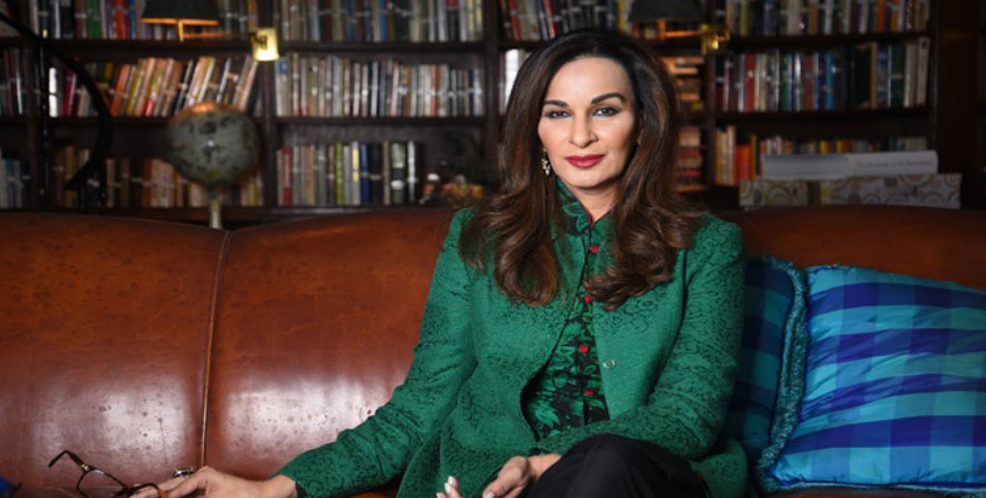
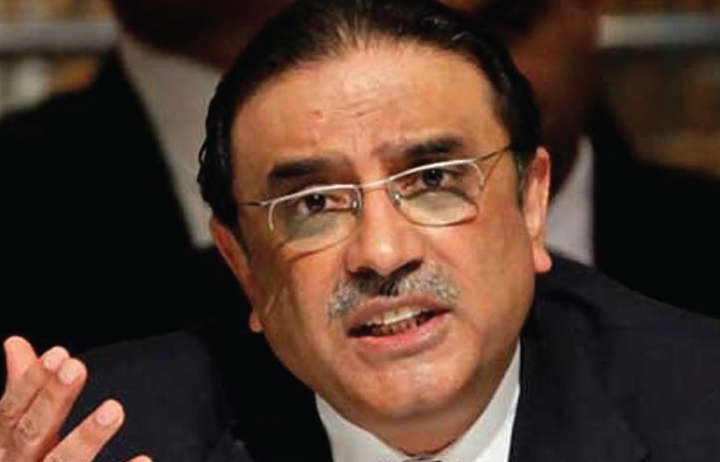
Sherry Rehman Expresses Deep Sorrow Over the Passing of Senator Irfan Siddiqui


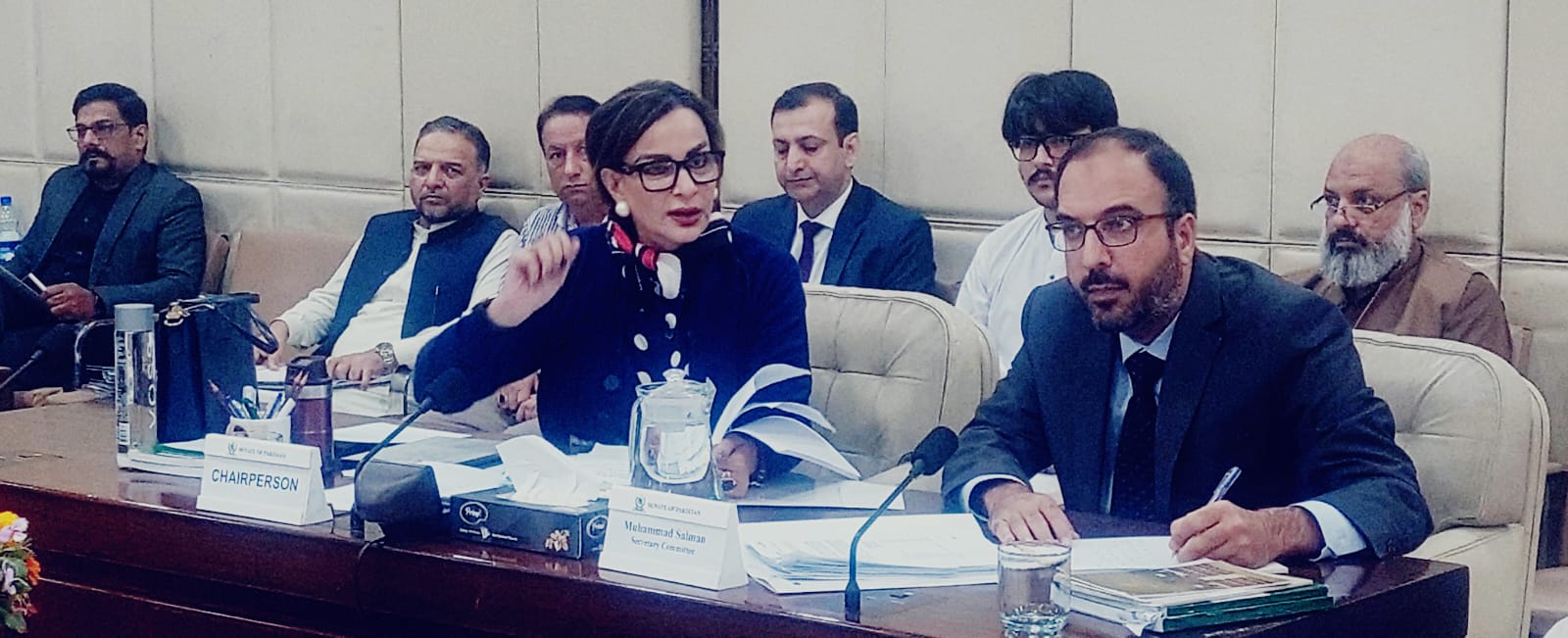
Vice President and Parliamentary leader PPP Senator Sherry Rehman, expressed profound grief and sorrow in the Senate today at the commemorative session on the passing of senior parliamentarian and columnist, Senator Irfan-ul-Haque Siddiqui, calling it “a day of deep sadness and mourning for all of us.”

Speaking on the Senate floor, Senator Rehman said,
“Today is a day of deep sorrow and mourning for this House. We have lost a dignified colleague and a friend of great decency. It is difficult to find words to express our condolences, because Senator Irfan Siddiqui was not only a distinguished parliamentarian, but a noble and kind-hearted human being who touched everyone with his humility and compassion.”

Senator Rehman said that the late senator was “was the Parliamentary Leader of the PML-N in the Senate, a compassionate and gentle soul, who never raised his voice and never spoke ill of anyone.”

Paying tribute to his character, she said,
“He was a great man who defined old-world grace, charm, and courtesy. His conduct reflected patience, tolerance, and moral strength. He lived a life that can truly serve as a beacon of guidance for others. Let us not only remember him as a colleague, but as an example of integrity and humility.”

She noted that Senator Irfan’s long association with journalism and literature had left a deep imprint on Pakistan’s intellectual life.
“He brought with him a long and rich experience in journalism and public writing. He wrote powerful and balanced columns in Jang and Nawa-e-Waqt, and even just days before his passing, he wrote another column — a testament to his commitment to writing till the very end.”

Chairman Pakistan Peoples Party (PPP) Bilawal Bhutto Zardari has paid glowing tribute to Allama Dr. Muhammad Iqbal, the Poet of the East, on his birth anniversary.


November 9: Chairman Pakistan Peoples Party (PPP) Bilawal Bhutto Zardari has paid glowing tribute to Allama Dr. Muhammad Iqbal, the Poet of the East, on his birth anniversary.

According to the press release issued by the Media Cell Bilawal House, Chairman PPP said in his message that Iqbal’s vision of a free and progressive nation continues to inspire generations to believe in themselves and work for the collective good. He further said that Quaid-e-Awam Shaheed Zulfikar Ali Bhutto and Shaheed Mohtarma Benazir Bhutto carried Iqbal’s dream forward by empowering the people and defending democracy.

Concluding his message, Chairman Bilawal Bhutto Zardari urged the nation: “On this day, let us pledge to build the Pakistan that Iqbal envisioned—a nation of hope, equality, and dignity for all, led by the courage of its youth.”

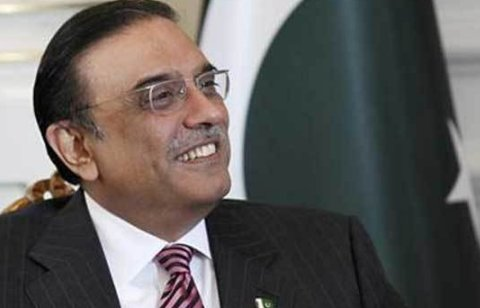
President Asif Ali Zardari met with His Excellency Sheikh Saoud bin Abdulrahman bin Hassan bin Ali Al Thani,


President Asif Ali Zardari met with His Excellency Sheikh Saoud bin Abdulrahman bin Hassan bin Ali Al Thani, Deputy Prime Minister and Minister of State for Defence Affairs of the State of Qatar, on the sidelines of the Second World Summit for Social Development in Doha.

The President underscored the close and historic ties between Pakistan and Qatar, particularly in the field of defence and security cooperation. He expressed satisfaction over the existing collaboration between the armed forces of the two countries in training, capacity building and defence production.

President Zardari emphasised the importance of expanding cooperation in joint exercises, defence technology and exchange of expertise, noting that such initiatives would further enhance regional peace and stability.

His Excellency Sheikh Saoud bin Abdulrahman bin Hassan bin Ali Al Thani commended the professionalism of the Pakistan Armed Forces and reaffirmed Qatar’s commitment to deepening defence relations with Pakistan. He reiterated Qatar’s interest in joint defence production and collaborative defence projects, expressing readiness to expand such initiatives in the future. He also assured Qatar’s support for facilitating peace and stability in the Afghan conflict.

The President appreciated Qatar’s continued support and said that Pakistan remained committed to further strengthening its strategic partnership with Qatar in diverse fields, including defence and security.

First Lady Bibi Aseefa Bhutto Zardari, Chairman Pakistan Peoples Party Bilawal Bhutto Zardari and Pakistan’s Ambassador to Qatar were also present during the meeting.

President Zardari meets Defence Minister of Qatar


Doha, 5 November 2025: President Asif Ali Zardari met with His Excellency Sheikh Saoud bin Abdulrahman bin Hassan bin Ali Al Thani, Deputy Prime Minister and Minister of State for Defence Affairs of the State of Qatar, on the sidelines of the Second World Summit for Social Development in Doha.

The President underscored the close and historic ties between Pakistan and Qatar, particularly in the field of defence and security cooperation. He expressed satisfaction over the existing collaboration between the armed forces of the two countries in training, capacity building and defence production.

President Zardari emphasised the importance of expanding cooperation in joint exercises, defence technology and exchange of expertise, noting that such initiatives would further enhance regional peace and stability.

His Excellency Sheikh Saoud bin Abdulrahman bin Hassan bin Ali Al Thani commended the professionalism of the Pakistan Armed Forces and reaffirmed Qatar’s commitment to deepening defence relations with Pakistan. He reiterated Qatar’s interest in joint defence production and collaborative defence projects, expressing readiness to expand such initiatives in the future. He also assured Qatar’s support for facilitating peace and stability in the Afghan conflict.

The President appreciated Qatar’s continued support and said that Pakistan remained committed to further strengthening its strategic partnership with Qatar in diverse fields, including defence and security.

First Lady Bibi Aseefa Bhutto Zardari, Chairman Pakistan Peoples Party Bilawal Bhutto Zardari and Pakistan’s Ambassador to Qatar were also present during the meeting.

President Zardari meets Vice President of China


President Asif Ali Zardari held a bilateral meeting with the Vice President of China, Han Zheng, on the sidelines of the Second World Summit for Social Development  here today.

Recalling his recent visit to China, the President said that Pakistan and China are iron brothers and all-weather strategic cooperative partners. He thanked China for its consistent and unwavering support to Pakistan through all challenges, reaffirming that friendship with China remains the cornerstone of Pakistan’s foreign policy.

The President commended China’s continued partnership in the successful implementation of the China-Pakistan Economic Corridor (CPEC), which has now entered its second phase of high-quality development.

Vice President Han Zheng conveyed warm greetings from President Xi Jinping and reaffirmed the enduring strength of the Pakistan-China friendship. He appreciated Pakistan’s efforts in combating terrorism and promoting regional peace and stability.

The Chinese Vice President noted that China would continue to support Pakistan’s economic development under the second phase of CPEC, particularly in transport and infrastructure, information technology, agriculture, and vocational training.

The two leaders reaffirmed their resolve to further deepen the all-weather strategic cooperative partnership based on mutual trust, respect, and a shared vision for regional peace and prosperity. They also agreed to continue close cooperation on issues of mutual interest at regional and international fora.

First Lady Bibi Aseefa Bhutto Zardari, Chairman PPP Bilawal Bhutto Zardari, and Pakistan’s Ambassador to Qatar were also present during the meeting.

Senator Sherry Rehman Urges Global Action on Climate Justice in BBC Interview


Chair of Senate Standing Committee on Climate Change,
Senator Sherry Rehman, in an interview with the BBC, called on historic big emitters to take meaningful action not only to curb rising emissions but also to address the escalating impacts of climate change on frontline nations.

“The reality for frontline countries, particularly in South Asia, is that global warming is already causing unpredictable and extremely volatile monsoons and other extreme weather events,” Senator Rehman said. “Unfortunately, the promised climate finance transfers are not materializing. Donor countries are redirecting funds to address their own climate stress, even as regions like Europe experience unprecedented heat — with 40-degree summers prompting emergency declarations in cities like London.”

She emphasized that while Europe faces new climate extremes, countries like Pakistan are enduring far harsher conditions, with temperatures frequently surpassing 50 degrees Celsius. “This stark disparity highlights the unequal treatment of resilience,” she noted. “The resilience of nations most affected by climate change is treated as secondary, and donor priorities remain misaligned with the urgent needs on the ground.”

Senator Rehman stressed the need to prioritize key areas in Pakistan’s climate response. “First and foremost, there is an immediate need to address the humanitarian disasters triggered by recurring climate events,” she said. “Beyond immediate relief, Pakistan must undertake a comprehensive climate governance audit. This is not about using ‘climate’ as a buzzword, but about critically evaluating our policies, planning, and infrastructure to ensure that future development does not exacerbate vulnerabilities.”

She concluded by reaffirming that Pakistan’s path to resilience must be “structured, strategic, and sustainable,” and reiterated that without climate justice and genuine financial support from major emitters, countries on the frontline of the crisis will continue to pay the highest price for a problem they did not create.

Sherry Rehman Calls for ‘Pakistan’s Own Conference of Parties’ to Build Climate Resilience


Senator Sherry Rehman, Chief Guest and Keynote Speaker at the Pakistan Red Crescent Society’s Pre-COP30 conference titled “From Policy to Practice”.

“This is a crucial convening,” she said. “Climate change is worsening, and the crisis will only gather higher velocity. Without urgent adaptation, the World Bank estimates that Pakistan could lose 18–20% of its GDP by 2050. So I ask: at COP30, thirty years later, where do we stand today? What are we giving and what are we taking from nature?”

She proposed convening “Pakistan’s own Conference of Parties—comprising provinces, experts, and people”— to intensify data-sharing, local innovations, public private partnerships across the federation. “Every province has its own share of challenges, from drought-hit Balochistan to the deforested valleys of Chitral to flood hit provinces of Sindh, KP and Punjab. People are still struggling with livelihood challenges in each. Every province has a different topography and different challenge, from mountain to delta, but every province has to act based on its access to resources, both in terms of capacity and finance.”

Touching on global finance, she questioned: “Where is the $300 billion from the New Collective Quantified Goal (NCQG)? What are developed countries contributing to the South? Countries should not have to compete internationally for climate funds —it is a fundamental right. Even early warning systems cost more than we can afford, and these are fundamental to survival now.” Developed countries should ideally be also asked to submit their Internationally Determined Contributions to the countries who have a negligible carbon footprint. Debt swaps and financial guardrails for the vulnerable must be built because, simply put, our house is burning at 53 C every summer .”

Senator Rehman underscored that Pakistan’s Nationally Determined Contributions (NDCs) 3.0 have been updated with ambitious goals, including a target to cut projected greenhouse gas emissions by half—17% through domestic efforts and 33% conditional on international finance—requiring $565.7 billion by 2035. “Between 2021 and 2025, Pakistan has already achieved a 37% emissions reduction without external aid,” she noted, but cautioned that the international climate finance conversation must translate into tangible relief for those on the frontlines. “The projected total cost of climate inaction in Pakistan is estimated at $250 billion by 2030 and $1.2 trillion by 2050,” she warned. “The people suffering these losses cannot wait for conference outcomes. Brazil is right to demand that adaptation be at the core of COP30—Pakistan’s needs must also be addressed.”

She underlined the urgent need to involve the private sector and mobilise innovative financial solutions: “Businesses must be part of building holistic resilience. We need some kind of financial mobilisation, because no matter how many cooling centres you build, you can’t cool a country where temperatures reach 53°C in Sindh and Balochistan. We also need to take responsibility for what we can do in terms of delivering climate action at home, in terms of providing sanitation and clean water. Right now we have very high pollution in our air and water, which are not the doing of any global emitter.”

Senator Rehman stressed the low recycling rate—“Pakistan only recycles 1% of its plastic, while globally it’s just 9%. Plastic is choking our drains, killing resilience, and worsening flooding”—and called air pollution a “serial killer,” responsible for over 128,000 deaths annually. She noted that “the Indus is now the second most polluted river in the world,” underscoring the interconnected crisis of air, water and land degradation.

Calling for localised and science-based solutions, Senator Rehman said: “This is not the era of big dams, as even the funding is not available for existing cost overruns on the projects already launched. We need to move towards innovation at scale —plastics converted into usable materials, students leading new models, and nature-based solutions such as mangrove monetisation through carbon credits in the Delta Blue project.”

Senator Rehman stressed that “resilience is not a slogan” but a lived reality built on clean water, sustainable livelihoods, and safer cities. “A clean city faces fewer health crises—less dengue, less malaria, less heat stress. The WASH sector is critical for de-risking our communities.”

Senator Rehman emphasised that the global climate crisis has deepened the divide between the ‘haves and have-nots’, with the Global South bearing the brunt of a crisis it did not create. “Our rivers, our monsoon, have taken on a monster quality. The floods of 2022 and now 2025 have shown that it is always the poorest who are hit the hardest. Futures are stolen when livelihoods, homes and hopes are washed away,” she said.

Senator Rehman gave a message of hope and agency:

“Volunteers, you are not powerless. You can be agents of change. Reduce your carbon and plastic footprints. Plant trees, nurture them to maturity, and become part of restoration and nature-based solutions. Pakistan must present itself at COP30 not as a victim, but as an equitable voice that leads the Global South—just as we did in 2022.” Senator Rehman commended the Red Crescent Society for its tireless work, she praised the organisation’s growing network of over 700,000 volunteers across Pakistan, describing them as “the heart, core and backbone of disaster response.”

The world is adding renewables, but not replacing fossil fuels


 At the Pre-COP30 Pak–C2 Energy Transition Dialogue organized by the Institute of Regional Studies (IRS), Senator Sherry Rehman, Chairperson of the Senate Standing Committee on Climate Change and Environmental Coordination, called for a bold regional approach to achieving a just and inclusive energy transition.

Speaking as Chief Guest, Senator Rehman emphasized that the Pakistan–C2 region — Pakistan, Kazakhstan, and Uzbekistan — with a combined population of 308.25 million and GDP of US$848 billion (IMF) — has the scale, capacity, and shared challenges to lead the global South in defining a collective transition pathway.

“We must dream the same green dream,” said Senator Rehman. “This transition cannot happen in silos. Pakistan, and Central Asia must bargain collectively, build regional consensus, and move forward together in this defining decade.We hope to meet the challenge at multilateral forums together — not in isolation.”

She emphasised ““Domestic climate governance responsibilities cannot be confused with climate justice at the multilateral level. The world must not ask the most climate-vulnerable nations to carry the burden of others’ emissions.”

She further said “Anger at inaction at home should not stop the search for climate justice at global forums as sharing of responsibility was the whole point of climate politics, especially after Paris”

Senator Rehman underscored that the global energy system remains dangerously unbalanced, with fossil fuels still receiving US$7 trillion in subsidies annually, despite record deployment of renewables. “The world is adding renewables but not replacing fossil fuels,” she said. “This dual expansion is pushing frontline countries like Pakistan — where temperatures have reached 53°C — closer to the brink.”

She warned that developing countries are “paying rent with human costs” for emissions they did not cause. “Pakistan emits less than 1% of global GHG emissions,” she reminded, “yet it bears the brunt of climate disasters, with floods, droughts, and crop losses eating into lives and livelihoods.”

Senator Rehman drew attention to the International Energy Agency’s (IEA) estimate that the world needs US$4.5 trillion per year in clean energy investments by 2030 to stay below 1.5°C. Developing countries, she said, face high capital costs, limited de-risking tools, and fragmented institutions, all of which constrain the energy shift.

“Climate finance is not charity — it is justice,” Rehman stressed. “We must decolonize our thinking and demand equity in the global energy transition.”

Pakistan, she noted, has already updated its NDCs 3.0, seeking US$565.7 billion in climate finance by 2035, to cut its emissions from 2.559 billion tons to 1.28 billion tons. Between 2021 and 2025, the country achieved a 37% emissions reduction — without significant external aid.

She also cautioned that domestic reforms must align with transition goals. “Our new net-metering policy, if not carefully designed, could disincentivize solarisation,” she said, referring to Pakistan’s aging grid, capacity payments, and inefficiencies. “Yet despite these challenges, Pakistan remains among the sixth most solarised markets globally — a testament to our people’s innovation and resilience.”

Calling for structured regional collaboration, Senator Rehman proposed the creation of a “Pak–C2 Regional Energy Transition Taskforce” to coordinate cross-border action and unlock shared opportunities. The Taskforce, she suggested, should focus on:

•           Joint R&D in renewable technologies and green hydrogen;

•           Regional grid integration under CASA-1000 and other corridors;

•           Unified green finance frameworks to attract large-scale climate investment; and

•           Transparent tariff and policy mechanisms to ensure predictability for investors.

“Technology offers common ground where politics falters,” she said. “When regions move together, critical mass becomes power — and that’s how real change happens.”

She underscored that Pakistan and Uzbekistan have pledged carbon neutrality by 2050, while Kazakhstan — a manufacturing powerhouse — can play a leading role in low-emission industrial processes.

“This debate must connect to our lived realities,” she said. “Energy justice and climate finance are not distant ideals — they are about the right to a liveable future.”

“Pakistanis are problem-solvers,” Senator Rehman concluded. “Give us one enabling policy — and we build, we fix, we innovate. That’s the hope we take to COP30.”

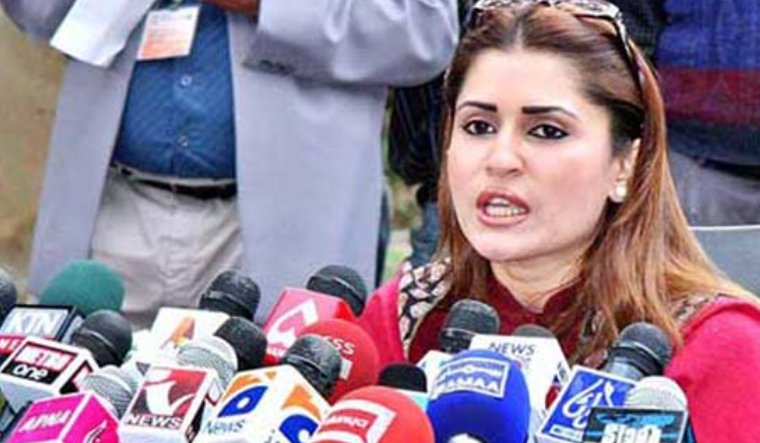
Central Information Secretary of Pakistan Peoples Party Parliamentarians, Ms. Shazia Marri,


Central Information Secretary of Pakistan Peoples Party Parliamentarians, Ms. Shazia Marri, has said that Chairman Bilawal Bhutto Zardari believes strengthening the farmer means strengthening Pakistan itself.

In her statement, Shazia Marri said that Bilawal Bhutto Zardari’s vision is clear — the true measure of progress lies in the prosperity of farmers. She added that during the PPP government, Pakistan moved from wheat shortage to becoming a wheat-exporting country, which was the result of farmer-friendly policies.

She said that Bilawal Bhutto Zardari has always stood by the farmers, advocating for timely procurement and fair prices. He wants to end all injustices faced by the farming community.

Highlighting the impact of climate change, Shazia Marri said that climate change poses a serious threat to every Pakistani farmer, and Bilawal Bhutto Zardari emphasizes the need for investment in sustainable and climate-resilient agriculture. He envisions a modern agricultural economy where small farmers progress through technology and access to fair markets.

She said the Pakistan Peoples Party believes that insurance, credit access, and transparent governance are essential to protect farmers from the negative effects of climate change.

Shazia Marri appreciated the government’s decision to allow wheat procurement, terming it a longstanding demand of the PPP. She added that approving the support price for wheat was also a PPP demand; however, she noted that fixing the price at Rs. 4,000 instead of Rs. 3,500 per 40kg would have been more beneficial for farmers.

She further said that reducing the income tax from 45% to 15% is an important relief measure for the farming community.

Ms. Marri said that Bilawal Bhutto Zardari rightly reminds us that no economy can be strong if its farmers are weak. Under his leadership, the Pakistan Peoples Party remains committed to respecting, empowering, and reviving the agricultural sector for a prosperous Pakistan.