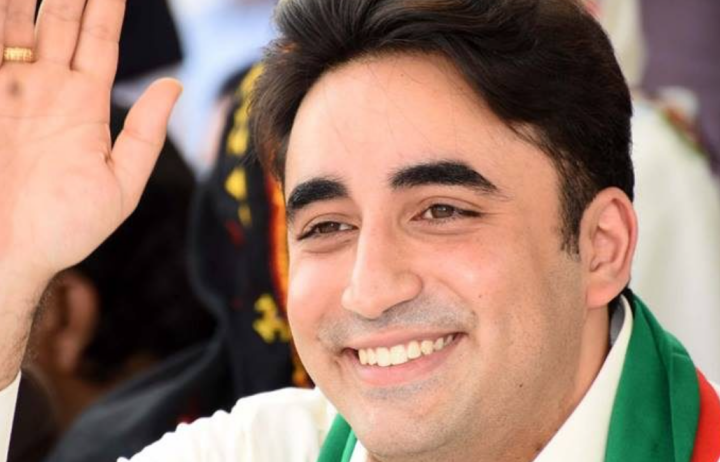
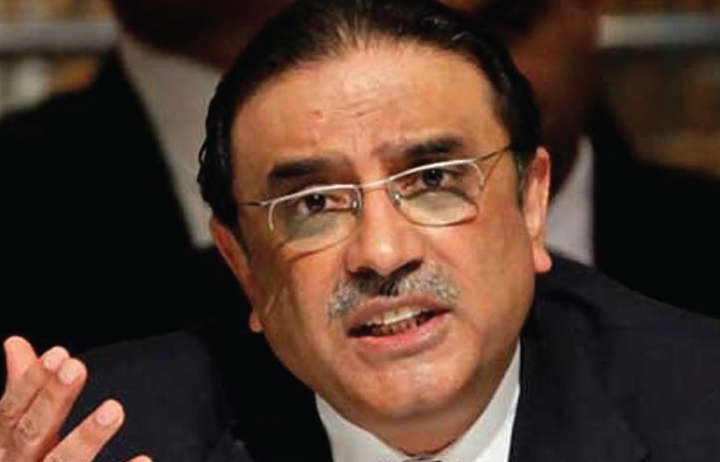
Chairman Pakistan Peoples Party (PPP) Bilawal Bhutto Zardari has paid rich tribute to Madar-e-Jamhooriat Begum Nusrat Bhutto on her death anniversary, remembering her as a symbol of courage


Chairman Pakistan Peoples Party (PPP) Bilawal Bhutto Zardari has paid rich tribute to Madar-e-Jamhooriat Begum Nusrat Bhutto on her death anniversary, remembering her as a symbol of courage, sacrifice, and steadfast commitment to democracy.

According to the press release issued by the Media Cell Bilawal House, Chairman PPP said in his message that Begum Nusrat Bhutto stood tall against tyranny and dictatorship, leading the struggle for democracy with unmatched grace and determination. “She was not only the devoted companion of Quaid-e-Awam Shaheed Zulfikar Ali Bhutto and the mother of Shaheed Mohtarma Benazir Bhutto, but also a guiding light for all who believe in freedom, justice, and equality,” he said.

He said that Begum Nusrat Bhutto’s sacrifices and resilience continue to inspire generations of Pakistanis, especially women, to stand firm in the face of oppression and to serve their nation with integrity and courage.

Concluding his message, Chairman Bilawal Bhutto Zardari reaffirmed his resolve to continue the mission of Madar-e-Jamhooriat — to uphold democracy, protect the rights of the people, and build a peaceful, progressive, and inclusive Pakistan.

President felicitates Ms. Sanae Takaichi on her election as Japan’s first female Prime Minister


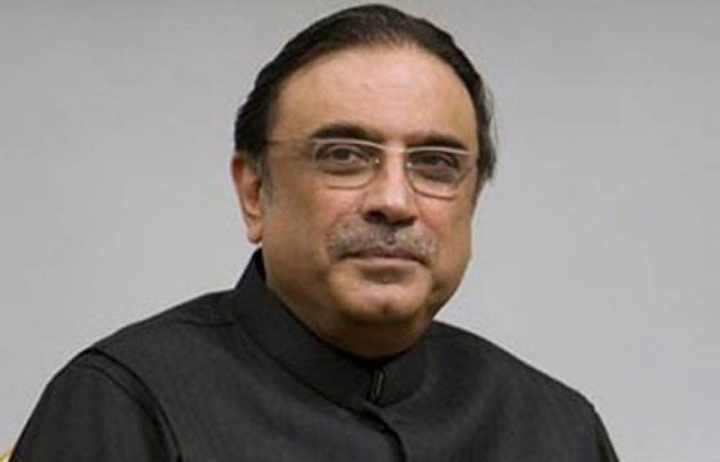
President Asif Ali Zardari has extended his heartfelt felicitations to Ms. Sanae Takaichi on her historic election as the first female Prime Minister of Japan.

The President said that her election marks a significant milestone in Japan’s political history and is a testament to the strength of its democratic traditions and commitment to gender equality.

He noted that while Japan has made history by electing its first woman Prime Minister, Pakistan had proudly chosen one of its finest daughters, Shaheed Mohtarma Benazir Bhutto, as the first female Prime Minister of the Muslim world almost four decades ago.

The President expressed confidence that under Prime Minister Takaichi’s leadership, Japan will continue to achieve progress and prosperity.

He also expressed the hope that the long-standing and friendly relations between Pakistan and Japan will be further strengthened in the years ahead.

President pays tribute to Shaheed Mohtarma Benazir Bhutto on Karsaz anniversary


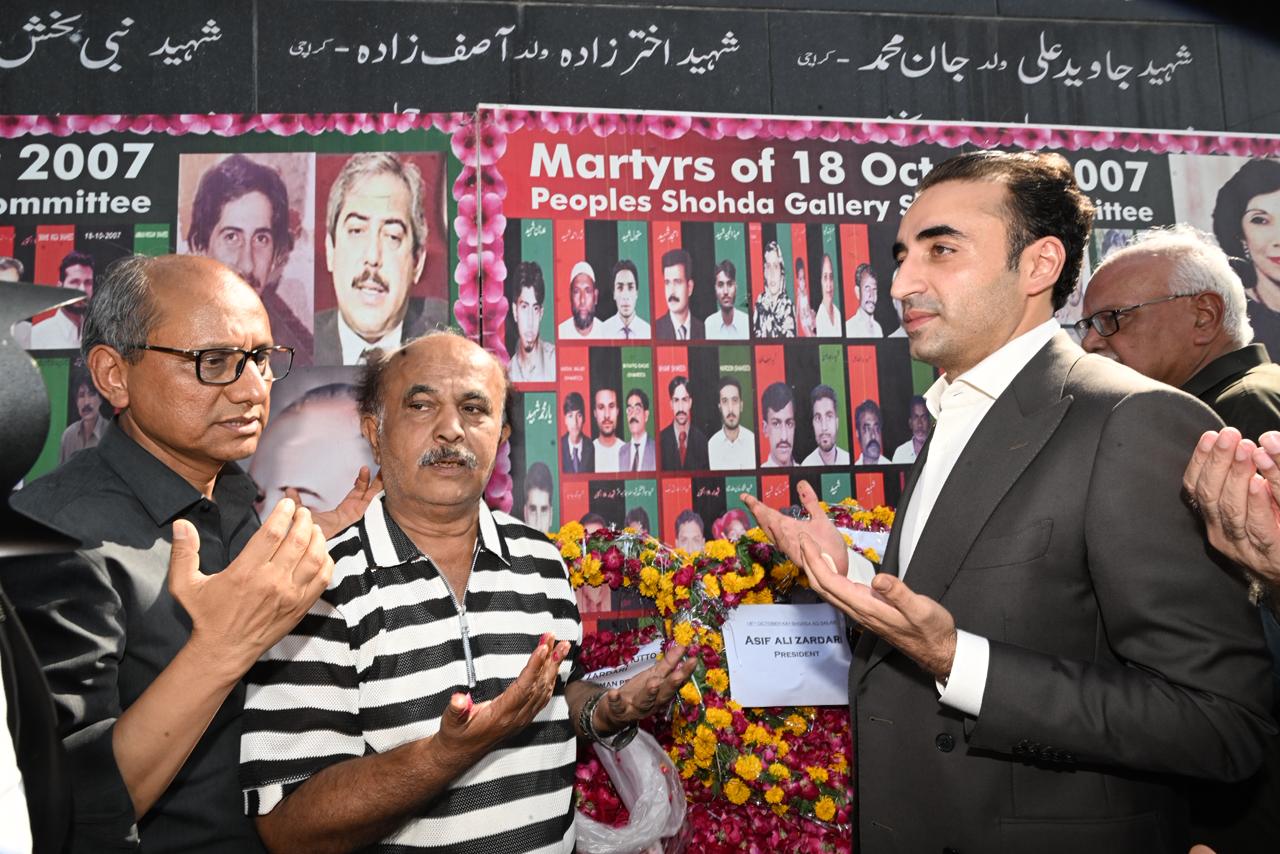
President Asif Ali Zardari has paid tribute to Shaheed Mohtarma Benazir Bhutto and the martyrs of democracy on the 18th anniversary of the Karsaz tragedy.

The President said that Shaheed Mohtarma Benazir Bhutto returned to Pakistan on this day despite clear threats to her life. He said she remained resolute after the terrorist attack at Karsaz and continued her struggle for the restoration of democracy.

Recalling the events that followed, the President said that she visited hospitals and neighbourhoods the next day to meet the injured and console the bereaved families, reflecting her deep concern for her workers and the people of Pakistan.

President Zardari said that from that day until her martyrdom, her life and sacrifice have remained a source of guidance and strength for all those who stand for democracy and peace.

He said that as the nation continues to confront terrorism and extremism, the courage and sacrifice of the martyrs of the Karsaz tragedy reinforce our resolve to defeat all such forces.

Chairman Bilawal’s message on International Day for Eradication of Poverty


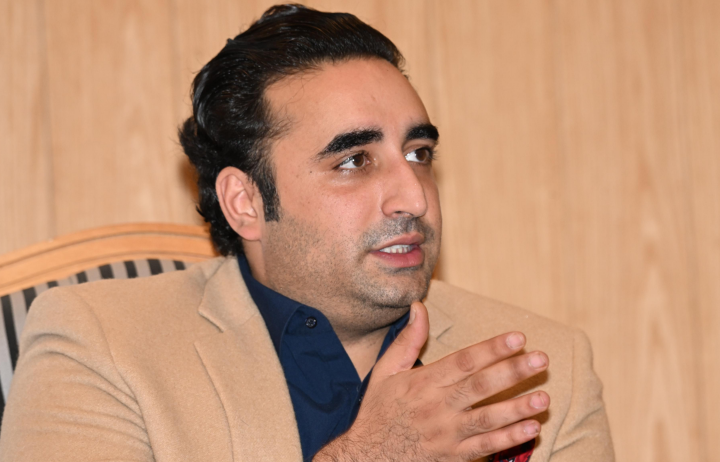
Chairman Pakistan Peoples Party (PPP) Bilawal Bhutto Zardari has reaffirmed his unwavering resolve to carry forward the mission of “Roti, Kapra aur Makaan” until poverty, inequality, and social injustice are completely eradicated from Pakistan. He said that Quaid-e-Awam Shaheed Zulfikar Ali Bhutto and Shaheed Mohtarma Benazir Bhutto devoted their lives — and ultimately embraced martyrdom — in their struggle for the dignity and rights of the poor and the oppressed.

According to the press release issued by the Media Cell Bilawal House, Chairman PPP, in his message on the International Day for the Eradication of Poverty, said that the Benazir Income Support Programme (BISP) — launched under the leadership of President Asif Ali Zardari during the previous PPP government — remains Pakistan’s most effective and transparent social protection mechanism. He described it as “a living legacy of Shaheed Mohtarma Benazir Bhutto’s vision — empowering women, uplifting families, and breaking the cycle of inherited poverty.”

Chairman Bilawal Bhutto Zardari urged the international community to recognize that climate change, conflict, and economic inequality are deepening global poverty and pushing millions toward despair. “It is time for the world to rise above geopolitical divisions and act collectively on humanitarian grounds to build a just, equitable, and sustainable global order,” he added.

President Zardari Strongly Condemns Cross-Border Attacks from Afghan Territory


President Asif Ali Zardari has strongly condemned the unprovoked cross-border attacks launched from Afghan territory on Pakistani border posts in the Spin Boldak area of Balochistan and the Kurram sector of Khyber Pakhtunkhwa.

The President termed the attacks a blatant violation of Pakistan’s sovereignty and territorial integrity, and an unacceptable act of aggression. He commended the professionalism and valour of Pakistan’s Armed Forces for effectively repulsing the assaults and defending the country’s borders.

President Zardari observed that the Afghan Taliban regime remains in constant violation of the Doha Accord by providing safe sanctuaries to terrorist groups that continue to attack regional countries, thereby destabilising the entire region including Pakistan. He further noted that the regime has failed to establish a broad-based and representative government in Afghanistan and continues to monopolise power to the exclusion of other political and ethnic groups.

The President called upon the authorities in Kabul to ensure that Afghan soil is not used for acts of terrorism or hostility against Pakistan. He emphasised that such provocations undermine regional peace and the long-standing bonds of brotherhood between the peoples of Pakistan and Afghanistan.

The President reaffirmed that Pakistan desires peaceful, cooperative relations with all its neighbours, but any act of aggression will be met with a firm and resolute response.

President lauds services of outgoing Australian High Commissioner


Outgoing Australian High Commissioner Mr. Neil Hawkins paid a farewell call on President Asif Ali Zardari at Aiwan-e-Sadr today.

The President commended him for his efforts in strengthening Pakistan–Australia relations during his tenure. He said the High Commissioner’s contributions had helped advance cooperation in political, economic, and defence areas, while also deepening people-to-people connections between the two countries.

President Zardari noted that Pakistan and Australia have long enjoyed friendly and cooperative relations, supported by shared interests and mutual respect. He said the two countries must continue to build on their partnership.

On economic ties, President Zardari said that while bilateral trade is growing, it still falls short of its true potential. He emphasised the need to intensify efforts to expand bilateral trade and investment opportunities.

The High Commissioner informed the President about his recent visit to Sindh and briefed him on the ongoing cooperation between Pakistan and Australia in the fields of agriculture and climate change. He said that he and his family are carrying fond memories of Pakistan, especially the warmth and hospitality of its people. Mr. Hawkins also remarked that Pakistan’s impressive ethnic, linguistic, religious, and culinary diversity makes the country dynamic and vibrant.

Wishing Mr. Hawkins success in his future endeavours, President Zardari said he hoped the High Commissioner would take with him warm memories of Pakistan and its people.

President Asif Ali Zardari has reaffirmed that Pakistan remains firmly committed to safeguarding its national interests, regional sovereignty, and security.


The President stated that Pakistan will never accept any disputed or misleading position on Jammu and Kashmir, reiterating that India’s unlawful claims over the territory are contrary to international law and the United Nations Security Council resolutions.

President Zardari said it is unfortunate that the current Interim Afghan administration has turned away from the just struggle of the oppressed people of Indian Illegally Occupied Jammu and Kashmir, thereby doing injustice to both history and the Muslim Ummah.

He noted that attacks launched from the territory of the Interim Afghan Government by India-backed Khawarij terrorists are a well-documented reality, confirmed in successive United Nations Security Council monitoring reports. Pakistan, he said, has repeatedly made it clear that its civilians and security personnel are being targeted through the nexus of the Indian sponsored Khawarij and  other terror groups. 

President Zardari urged the Interim Afghan government to take concrete and verifiable action against anti-Pakistan terrorist elements operating from the Afghan soil. He emphasised that terror menace of the Khawarij and other terror groups sponsored by India remain the greatest threat to regional peace and stability.

“Terrorism is a shared challenge and its burden cannot be placed on any single country,” the President remarked.

He said Pakistan has demonstrated Islamic fraternity and exemplary neighbourliness by hosting millions of Afghan refugees for over four decades. The dignified repatriation of Afghan citizens, he added, is in the interest of both countries and essential for sustainable peace.

President Zardari reaffirmed that Pakistan will continue to support the educational and humanitarian needs of the Afghan people, but no compromise will ever be made on Pakistan’s national sovereignty.

He recalled that Pakistan has extended every possible facilitation to Afghanistan in trade, economic connectivity, and people-to-people exchanges. Mutual cooperation and economic partnership, he said, are the foundation for lasting peace and regional prosperity.

President Zardari underscored that Pakistan desires a peaceful, stable, and prosperous Afghanistan. He said brotherly relations must be based on mutual respect, security cooperation, and a shared commitment to regional peace.

The President expressed hope that the Interim Afghan Government will prevent its soil from being used by Khawarij and India-backed terrorist elements against Pakistan, stressing that only joint and practical measures can guarantee enduring peace in the region.

President of the Islamic Republic of Pakistan, Message on the occasion of World Mental Health Day 10th October, 2025


Today, as the world observes Mental Health Day, I extend my solidarity to all those in Pakistan and around the globe who live with mental health challenges. This year’s theme reminds us that mental health is not an isolated concern, it is fundamental to our personal well-being, our families’ stability, our communities’ cohesion, and the progress of our nation. Good mental health is the foundation upon which human dignity, productivity, and hope are built.

Pakistan faces immense pressures like economic, rapid urbanization, natural disasters, displacement, poverty, and the lingering effects of conflict and trauma. These factors leave invisible scars on the minds and hearts of our people. Studies show that around 24 million Pakistanis require some form of mental health care. Depression and anxiety affect nearly one in five adults, while severe conditions such as schizophrenia and bipolar disorder impact 1–2% of the population. Yet, our country has only about 500 trained psychiatrists to serve a population of over 240 million.

Recognizing this challenge, the Government of Pakistan, through the Ministry of National Health Services, has taken a series of steps to integrate mental health into the broader public health system. Mental health services are being introduced at primary health care facilities, while tele-mental health platforms are extending access to those in remote and underserved areas. Community health workers are being trained to identify symptoms early and provide support, while awareness campaigns are tackling stigma and misinformation.

We are also striving to strengthen the policy and legislative framework around mental health, so that it receives its rightful place in national health planning. Increased allocations for mental health in the national budget, the expansion of school-based counseling programs, and partnerships with universities and NGOs are all part of this growing effort. These steps are vital milestones toward building a healthier Pakistan.

However, the state alone cannot win this battle. Families must support open dialogue and compassion. Schools must foster resilience and provide safe spaces for children to share their struggles. Workplaces must adopt policies that protect employees’ mental health and well-being. Religious, cultural, and community leaders have a vital role to play in breaking down stigma and encouraging early help-seeking. Together, society can ensure that no Pakistani feels ashamed or isolated for facing a mental health challenge.

On this World Mental Health Day, I urge every citizen to become an ambassador for kindness and understanding. Speak up against stigma. Support your friends, neighbors, and colleagues. If you are struggling, know that seeking help is an act of strength, not weakness.

As President, I reaffirm my pledge that mental health will remain a national priority. Together, let us build a Pakistan where every individual has the opportunity to live with dignity, hope, and resilience, free from the shadows of stigma and neglect.

May Allah Almighty guide our efforts and grant healing and strength to those in need.

Renewables are the path to energy sovereignty, security and energy democracy- Sherry Rehman


Senator Sherry Rehman, speaking as Chief Guest at the Parliamentary Forum on Energy and Economy “Implications of IGCEP 2025, politics of energy generation in Pakistan” on Thursday, commended the conveners of the forum for addressing issues of great national importance and fostering dialogue that involves matters central to Pakistan’s energy and economic future.

Senator Rehman underscored that “energy represents wealth for a country — it is the foundation of energy democracy, security, and sovereignty.” She emphasized that “every industry, every household, every school, and every farm depends on low cost, sustainable, durable and affordable energy to power growth and human development. Electricity is not a privilege — it is a human right.”

Referring to global energy trends, Senator Rehman noted that renewable energy has overtaken coal as the world’s leading source of electricity in the first half of 2025. Growth in solar and wind energy, she said, met 100% of the rise in global electricity demand, driving down reliance on coal and gas.
She underscored that in 2024, 47% of Pakistan’s electricity came from low-carbon sources (Ember 2025), while according to Pakistan’s Ministry of Energy, the figure was even higher at 55% — both well above the global average of 41%. Pakistan ranked as the 26th largest country in the world by electricity demand, a clear sign of its growing energy footprint.

Senator Rehman reaffirmed Pakistan’s climate commitments under its Nationally Determined Contributions (NDCs) — to achieve 60% of power generation from renewable sources by 2030, net-zero emissions by 2050, a 30% transition to electric vehicles by 2030, and a complete ban on imported coal. “Renewables are the path to energy sovereignty and energy democracy.”

Citing Pakistan’s remarkable rise in the global solar landscape, Senator Rehman stated that Pakistan is now the 6th largest solar market in the world (World Economic Forum, 2025).
She lauded the Sindh Government’s pioneering role in renewable energy, recalling how it launched solar initiatives as early as 2013 — solarizing 600 schools in Nagarparkar and electrifying border villages in Sanghar despite federal restrictions at the time.
Shedding light on the Sindh Solar Energy Project (SSEP) led by Chairman Bilawal Bhutto Zardari and supported by the World Bank, she said the initiative aims to provide affordable solar systems to 500,000 low-consumption households, with priority given to beneficiaries of the Benazir Income Support Program (BISP).

Senator Rehman cautioned that Pakistan’s current energy planning remains “rooted in a 20th-century grid system — archaic, aging, and unoptimized.” She called for a “low-cost, best-cost” energy system that is inclusive, efficient, and sustainable.
“The biggest flaw in the IGCEP 2025 plan is that it did not include adequate consultation at the right level,” she noted. “In the absence of provincial involvement, several provincial governments have raised concerns over the exclusion of their power projects from the IGCEP. Similarly, there is a notable lack of inclusion of significant variable renewable energy projects (solar and wind) for Sindh and Balochistan, despite their vast natural potential in these resources.”

“This intervention requires parliamentary consensus and provincial consultation — not just box-ticking exercises. Real consultation must be institutionalized through the Council of Common Interests (CCI), public audit, and parliamentary oversight.”
Senator Rehman pointed out the need for serious reform in regulatory and investment frameworks:
“NEPRA has lost a great deal of investment because it has failed to provide a predictable contractual environment. This is Pakistan’s principal issue — the absence of policy consistency. Governments change policies without consulting anyone, and that undermines investor confidence.”
She also criticized the continued debate around privatization of distribution companies (DISCOs), arguing that “at least the public sector remains answerable, and utility bills are already burdened with Rs 3.6 per unit due to circular debt — something every citizen is paying for.”

Senator Rehman reiterated that despite a nominal energy surplus, citizens continue to face “ghair ilanī load-shedding” (unannounced power outages), and high tariffs keep affordable energy out of reach for millions. “No Pakistani should be left outside the electricity tent,” she declared.
She urged policymakers to “incentivize renewable energy and make it cost-effective for people,” and to communicate reforms in “a language everyone understands.”
“This is a moment to audit, to listen, and to reform — to build an energy sector that works for the people. We don’t need miracles, we just need systems that work,” she concluded.

Not to be published/telecast/broadcast before 8th October 2025

Asif Ali Zardari.
President of the Islamic Republic of Pakistan.
Message on the occasion of National Resilience Day – 8th October, 2025


On 8th October each year, we remember the devastating earthquake of 2005, which claimed over 80,000 precious lives, injured countless others, and left millions homeless. We also pay tribute to those who came together in solidarity and endured the devastating impacts of all natural and induced disasters in Pakistan’s archives.

This year marks the twentieth anniversary of 2005 earthquake, a powerful testament to the unbreakable spirit of the Pakistani people. In the face of unimaginable tragedy, we rose together Neighbours became rescuers, strangers became family, and our nation emerged stronger, more united, and more determined to build a resilient future.

From the ashes of disaster, we have rebuilt schools, hospitals, and homes. We have learned that true strength lies not in avoiding adversity but in overcoming it with faith, unity, and innovation. As we look ahead, let us forge a nation where no disaster can break our resolve.

This year too we experienced, yet another Monsoon flood with sizeable, affected population is still displaced out of homes. Huge losses have been reported in agriculture, infrastructure, services and livelihoods. It is a stark reminder of ever-growing threats of climate change. Despite our negligible contribution to global carbon emissions, Pakistan like many other small developing economies continues to bear a disproportionate share of its consequences.

Over the years, Pakistan’s disaster management framework has made important strides, transitioning to become one template of excellence. Pakistan National Disasters Management Authority has crafted state of art National Emergencies Operation Centre (NEOC) – harnessing advanced technology for early warning and risk assessment. Our national response has become more coordinated and robust. Magnitude of recurring disasters underscores the urgent need for stronger preparedness sustainable development and whole-of-society engagement.

On this “National Resilience Day, I call upon all federal and provincial institutions and stakeholders, civil society, academia and the private sector to work in synergy to reduce impact of calamities, enhance shared preparedness and safeguard all in need.

May Allah guide us in building a safer, stronger, and more resilient Pakistan. Ameen.