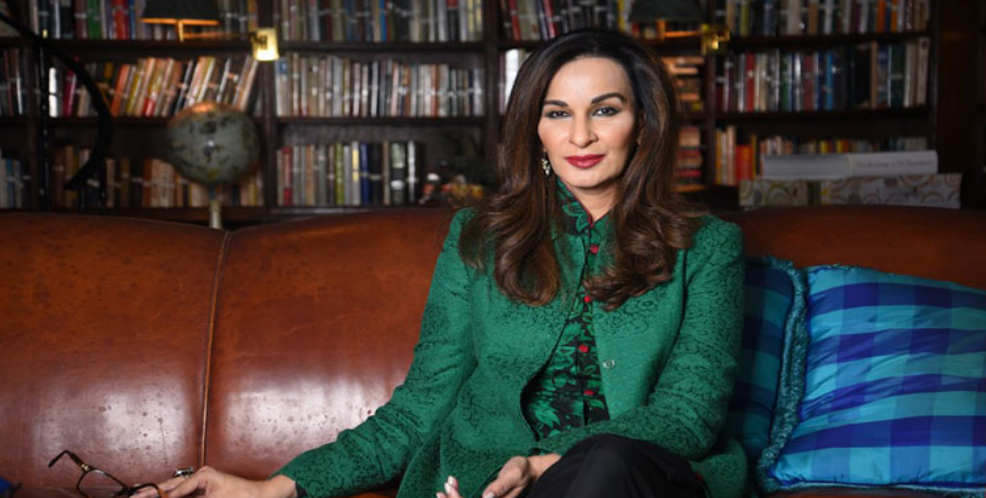
Vice President of the Pakistan Peoples Party Senator Sherry Rehman called for urgent, coordinated action to ensure effective implementation of Pakistan’s gender-based violence (GBV) laws

Vice President of the Pakistan Peoples Party Senator Sherry Rehman called for urgent, coordinated action to ensure effective implementation of Pakistan’s gender-based violence (GBV) laws, while pursuing the notice she has submitted in the Senate for further action in the Senate Standing Committee on Human Rights.

The meeting was convened on Senator Rehman’s notice and pursuant to a motion she tabled in the Senate to review the state of GBV legislation, enforcement, and outcomes.

Senator Rehman noted that Pakistan has enacted a significant number of laws at both federal and provincial levels to address violence against women, with additional legislation currently under consideration. However, she stressed that the persistent gap between lawmaking and enforcement continues to undermine justice. “The media and the public repeatedly ask us: you make laws, but where is the implementation?” she said, adding that this question must be answered with concrete action rather than assurances.

Senator Rehman said that it has become a source of disquiet for lawmakers like her who have been pushing GBV laws in different iterations since 2002, there is a still a huge gap in their implementation. “Ensuring the safety, dignity, and rights of women is a constitutional responsibility of the state and a core priority of the Pakistan Peoples Party,” she emphasized.

Some alarming numbers were highlighted for sexual abuse, murder, rape acid attack and domestic violence during the meeting: a total of 28059 cases were decided by the trial courts, out of which 26842 cases resulted in acquittal. Out of which 21877 were acquitted due to resiling of witnesses e.g. complainant/victim/star witnesses.In compoundable offences like murder and hurt cases, 1299 were acquitted on compromise.3171 cases have resulted in acquittal on merit. 1217 cases were convicted on merit.

Further, sharing recent statistics, Senator Rehman stated that during 2024 alone, 32,617 cases of gender-based violence were reported across Pakistan, including rape, abduction, domestic violence, and killings in the name of so-called honour. Despite the establishment of 480 GBV courts nationwide, she noted that the backlog of cases continues to grow at an alarming rate, further delaying justice for survivors.

Citing findings from the report of the Law Commission of Pakistan and the National Commission for Human Rights (NCHR), Senator Rehman described the available data on gender-based violence as deeply troubling. She pointed out that the conviction rate in GBV cases remains extremely low at just 5 percent, while 64 percent of cases result in acquittals, raising serious questions about investigation standards, prosecution, and judicial processes.

“This issue is like an iceberg,” Senator Rehman said. “A large number of cases are never reported, never registered, and never documented. What we see in official figures is only a fraction of the actual scale of violence faced by women.

According to Human Rights Watch, 70% of GBV incidents go unreported due to survivors’ fear of retaliation and societal victim-blaming.”

She further emphasized that low conviction rates are exacerbated by systemic pressures placed on survivors, police officials, prosecutors, and judicial officers, often allowing powerful interests to influence outcomes. “We must ask ourselves how we can ensure that justice is not subordinated to private pressures and vested interests,” she said.

Senator Rehman asserted, “Through the committee and the cooperation of the committee Chairperson Senator Samina Mumtaz, we had asked for police departments, prosecutorial officials, advocate generals, NCHR, NCSW, and all federal, provincial departments to be here at an intersection where we can find ways to plug the loopholes in laws which are allowing such low conviction rates. This is key to implementation of these laws , and officials brought very clear and important recommendations which are now being collated by the Secretary of the committee for further action and reforms in the each of the provinces as needed.”

She further added “The task should be to break the cycle of impunity that enables victim shaming and adversarial social and police as well as prosecutorial environments in such cases.”

Senator Rehman also raised concerns about social attitudes that perpetuate impunity. She criticized the widespread culture of victim-blaming, where the focus shifts from the crime to the character of the survivor. Referring to Geo tv drama serial “Case No. 9”, based on GBV courts, she acknowledged its role in raising awareness but cautioned that even such narratives sometimes reinforce harmful stereotypes by placing implicit blame on victims.

Shedding light on the gravity of societal normalization of violence, Senator Rehman cited a disturbing incident in which a perpetrator of an honour killing was publicly welcomed with drum-beating and congratulated. “This reflects a dangerous mindset that glorifies violence and must be confronted head-on,” she said.

Concluding her remarks, Senator Rehman stated, “We have made the laws. Now the real challenge is ensuring their effective and uniform implementation.”

Acknowledging that transformative change cannot happen overnight, she called for practical, time-bound measures to strengthen investigations, protect survivors, improve prosecution, and address institutional weaknesses. “If we cannot bring a revolution in one night, we must at least break this stagnation through sustained reform and accountability,” she said.
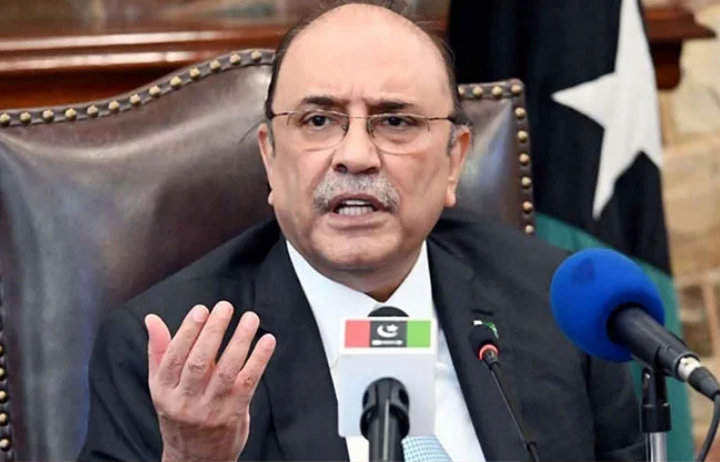
President meets party delegation from Gilgit-Baltistan

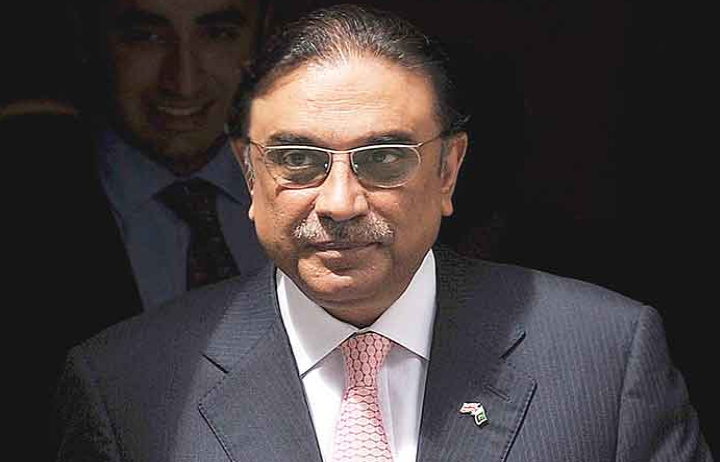
A PPP delegation from Gilgit-Baltistan, led by former Chairman Senate, Syed Nayyar Bokhari, called on President Asif Ali Zardari at Aiwan-e-Sadr today.

The delegation briefed the President on political and developmental matters concerning Gilgit-Baltistan.

The President emphasised the importance of dialogue, consensus and inclusive governance in addressing regional issues and strengthening democratic institutions.

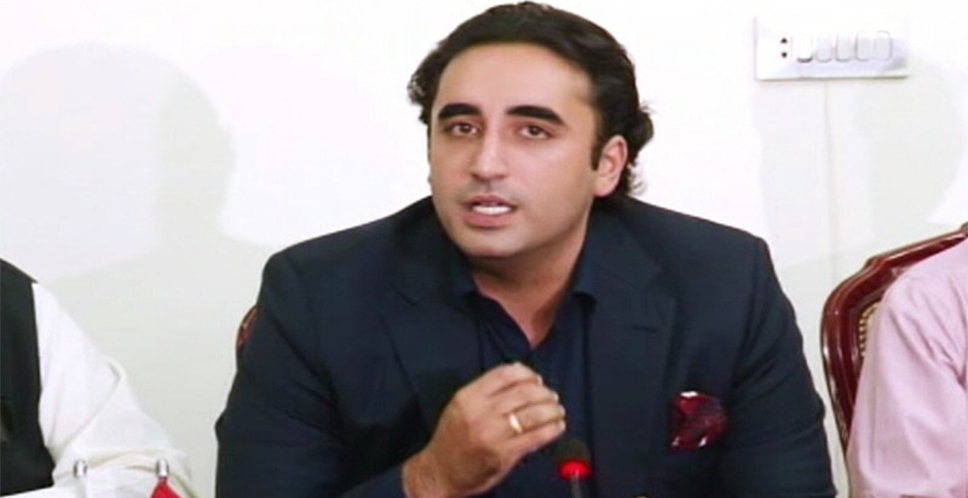
Chairman Pakistan Peoples Party (PPP) Bilawal Bhutto Zardari has paid profound tribute to the martyrs of the Army Public School, Peshawar

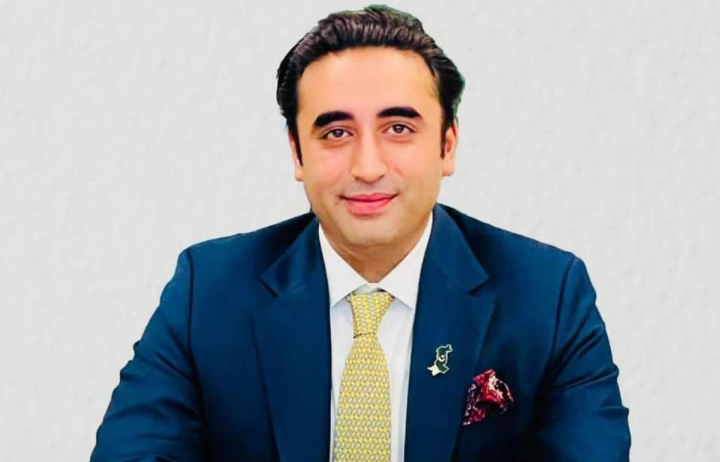
Chairman Pakistan Peoples Party (PPP) Bilawal Bhutto Zardari has paid profound tribute to the martyrs of the Army Public School, Peshawar, on the anniversary of the tragic attack, remembering the innocent children and teachers whose lives were brutally taken on December 16.

According to the press release issued by the Media Cell Bilawal House, the PPP Chairman said in his mesage that the APS tragedy remains a permanent scar on the nation’s conscience and a moment of collective grief that reshaped Pakistan’s resolve against terrorism. “December 16 reminds us that terrorism has no religion, no humanity and no justification. Our response must always be unity, justice and an unshakeable commitment to protect our children,” he said.

Reaffirming the PPP’s commitment to peace, education and the rule of law, Chairman Bilawal Bhutto Zardari said the Party stands with the families of the martyrs and will continue striving for a Pakistan where every child can learn, grow and dream without fear. He concluded by saying, “We bow our heads in reverence to the APS martyrs. Their sacrifice will forever guide us towards a safer and stronger Pakistan.”

Chairman Bilawal address industrialists and business community in Lahore

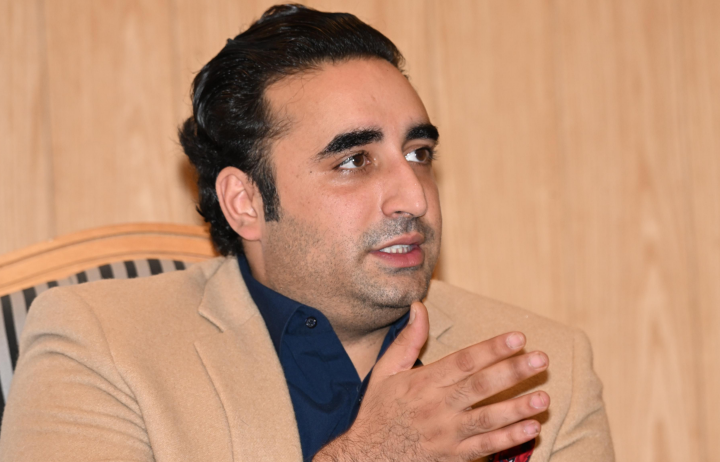
Chairman Pakistan Peoples Party, Bilawal Bhutto Zardari addressed a meeting of industrialists and business community of Punjab in Lahore on Tuesday Afternoon.
Chairman Bilawal said that he wants to speak about future of business community and how the Pakistan Peoples Party can help. He appreciated the efforts and research in the 165 districts in Pakistan of the business community to increase the opportunities of exports. He said that we also want to give our input and to implement your efforts. The PPP laid the foundation of China Pakistan Economic Corridor as its aim was to benefit Pakistan and its people. He said “It was a matter of pride for me to find out as the foreign minister that China specially accommodates Pakistan and wants to give preference to Pakistani goods for export but we are not taking the full advantage of that Chinese preference for Pakistani goods.” We need to get benefit of this favorable status and then we can ask them for more. China has provided this opportunity in every sector but we are not taking full benefit of these opportunities. We have to look for opportunities with this new tariff situation. We hope that the federal government must be working on those lines. We have GSP Plus with Europe and we have increased 80% export with this GSP Plus. Europe has also benefitted 60% in export to Pakistan with this GSP Plus. We can find economic opportunities district-wise, specially in value added goods.
He said that we can look for increase export in foreign market. We can also find Public-Private partnership district-wise. This will be an achievement for Pakistan if we work district-wise. As far as the President, Governor Punjab, Governor Khyber Pakhtunkhwa, Sindh government and Balochistan government and the Prime Minister are concerned, they all wants to work with you. There is a difference between Prime Minister’s and our teams is that they believes in centralization whereas we believe in de-centralization. Your district-wise plan will strengthen our argument. I want to strongly appreciate your district-wise research. Chairman PPP said that he is ready to consider the recommendations for economy of the business community.
Regarding the issue of taxes, he said that business community’s point of view is very valid. We all want to increase revenue of Pakistan, tax collection and tax net. We all have the same goal for economic progress and human development. We have different perspective regarding how to reach that goal. This and the previous government wanted to run the economy by force but I do not think that country’s economy can be run by force. We should run the economy with understanding. There is an English proverb that you can catch more with honey than vinegar. If we respect the tax contributing citizens instead of brow beat them to pay tax then we can get far better results. There is an example that before 18th amendment the collection of sales tax on services for federation was collected by the FBR and the record is for everyone to see that how much the FBR used to collect. After 18th amendment Sindh and other provinces started collecting these taxes for federation and we have broken the record for collecting these taxes. Every province has collected more than previously collected by the federation. This is an evidence of the benefit of de-centralization. The performance of Sindh province in collecting these taxes has been better than other provinces. The secret of this better performance is that Sindh has less sales tax on services in Sindh than other provinces so that business community desires to do business in our province. Our approach is to encourage the business community. We should make FBR an institution in which every province should have representation. People and business community should have confidence of FBR so that we can achieve our targets of tax collection. Tax should be a responsibility not a burden.
We request the federal government that if it needs to overcome economic difficulties then the solution is there. At the moment, the FBR also collects sales tax on goods for the federation. This responsibility may also be given to the provinces. If the provinces meet your target then we are ready to give all these collections to the federation. If the provinces do not meet the targets then the federation may deduct that amount from our share in the kitty on a condition that if we collect more than the target then that money is given to the province which collects that extra amount. In this way the provinces will have an incentive.
The power issue has been a chronic problem in Pakistan. We can look for solutions to overcome this issue. We need to study the proposal presented by the business community of Punjab in this regard. The manifesto of the PPP for the last elections wanted to give relief to the people using up to 200 units. We can still subsidize the people using less than 200 units. We need to change our concept of relief. Instead of cross-subsidizing the rest of the population, in the short term we seek to provide through green energy to people using less than 200 units. We have tried our best and the PPP has provided power through Thar Coal Project of the Sindh government which is the cheapest energy generation project. Thar Coal Project is a Public Private Partnership project, provided energy to Faisalabad. This project was initially not for Karachi. The provincial governments can stablish energy generation plants for 50 megawatts. We had two plants of 50 megawatts which is supplying the cheapest electricity to K-Electric through our own built transmission line. Chairman Bilawal offered business community of Punjab to get coal from Sindh.
One of notable achievement of the Sindh government has been the Public Private Partnership which is performing great in sectors like infrastructure, education, health and energy. This improves service delivery of Sindh government. We hope that as a result of your district-wise research we can take this Public Private Partnership to district level. We can get great results by this Public Private Partnership. Special Economic Zone of Khairpur in Sindh has been recognized by a magazine of Financial Times. We have other Economic Zones as well in Larkana, Dhabeji and others. We need to de-centralize these economic zones, he concluded.

Message of President Asif Ali Zardari, on 40th Anniversary of SAARC Charter Day 8 December 2025

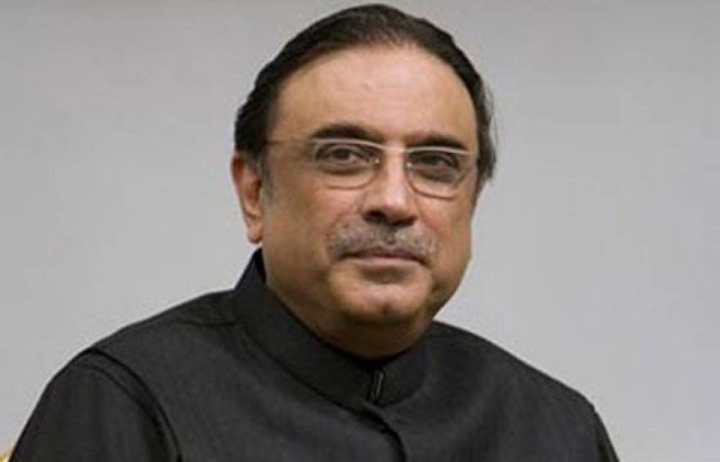
As we mark the 40th anniversary of the South Asian Association for Regional Cooperation(SAARC), I extend greetings to the peoples and governments of our region.

SAARC began in Dhaka in December 1985 with a simple understanding that South Asia’s future would be more secure and more prosperous if its nations worked together. Islamabad has played its part in advancing that vision, hosting the 4th Summit under Shaheed Mohtarma Benazir Bhutto during her first tenure and later the 12th Summit.

The 19th Summit was to be held in Islamabad in 2016, in line with Pakistan’s turn to host, but India’s refusal to attend halted the process and for the past 11 years SAARC has remained stalled. With disputes across nearly all its borders, India’s approach has become the central impediment to meaningful regional cooperation, leaving the region’s peace and progress unnecessarily captive to its narrow choices.

This impasse has led several member states to reflect on whether South Asia can afford continued paralysis. There is now growing interest in exploring a revived regional format that keeps the door open for all, yet does not allow one country to block collective progress. Important regional countries like Iran and China, can also be made part of the revival plan. Their participation would strengthen connectivity, economic integration and stability across the wider neighbourhood.

Pakistan remains committed to a cooperative, inclusive and forward-looking regional order. Our geography places us at the meeting point of South Asia, Central Asia and the Middle East. We are ready to work with all willing states to promote trade, transit, energy linkages and people-to-people ties that benefit the entire region.

On this Charter Day, I encourage South Asian nations to approach the future with clarity and sincerity. The region’s challenges are shared and so must be the solutions. With a spirit of respect and practical cooperation, we can shape a more peaceful and prosperous South Asia for our future generations.

Chairman Pakistan Peoples Party (PPP) Bilawal Bhutto Zardari graced the opening ceremony of National


Chairman Pakistan Peoples Party (PPP) Bilawal Bhutto Zardari graced the opening ceremony of National Games 2025 in Karachi as the chief guest, hosted by the Government of Sindh, and expressed his delight at the return of this prestigious sporting event to the city after 18 years.

According to the press release issued by the Media Cell Bilawal House, Chairman PPP, while addressing the opening ceremony of the 35th National Games, warmly welcomed the young athletes and delegations from Azad Jammu & Kashmir, Gilgit-Baltistan, Khyber Pakhtunkhwa, Punjab, and Balochistan to Karachi, saying, “Welcome to Karachi.” He said that after 18 years, the city is once again hosting the National Games and hoped that the event would mark the “beginning of a positive and inspiring environment” for young athletes from Sindh and across the country.

Chairman Bilawal Bhutto Zardari also expressed his joy at the impressive turnout of youth at the ceremony held at the National Stadium Karachi, emphasizing that the young people of Pakistan are the nation’s future and will lead the way in every field, including sports. “These children sitting before me today will, in the years to come, win medals for Pakistan at major international sporting events. You are our future Olympic champions,” he said.

The event was also attended by Sindh Chief Minister Syed Murad Ali Shah, Provincial Minister for Sports and Youth Affairs Sardar Muhammad Bux Mahar, along with other government, political, and social dignitaries.

Message of President Asif Ali Zardari to Mr. Alexander Stubb, President of Finland on the 108th Independence Day of Finland


On behalf of the Government and the people of Pakistan, and personally, I extend my heartfelt felicitations and best wishes to Your Excellency and the people of the Republic of Finland on the auspicious occasion of the 108th Independence Day of Finland.

Since its independence, Finland has made remarkable progress in education, technology, innovation, research, biotechnology, forestry and several other sectors. The country’s consistent top ranking on the Global Happiness Index for eight consecutive years stands as an indicator of the extraordinary talent, resilience and creativity of the Finnish people.

Pakistan attaches great importance to its relations with the Republic of Finland. We share convergence of views on major international issues and uphold common values of democratic pluralism and economic liberalism.

There exists immense potential for cooperation, particularly in the fields of business, education, green transition, digitalisation, mining and telecommunications.

Pakistan remains committed to working closely with the Republic of Finland for the promotion of political, commercial and people-to-people linkages. It is our sincere desire that the friendly relations between our two countries continue to grow from strength to strength in the years ahead.

Message of President Asif Ali Zardari on the National Day of Thailand


At this difficult time, I wish to express Pakistan’s deepest sympathy and solidarity with the Government and people of the Kingdom of Thailand in the wake of the recent devastating floods in the southern provinces. The tragic loss of life and the impact on over one million households is a stark reminder of the urgent need for regional and global cooperation to confront the challenges of climate change, which is affecting South and South East Asia more severely than many other parts of the world. Pakistan, too, is experiencing the increasing consequences of climate change and stands ready to work with Thailand and the wider region to enhance resilience and preparedness.

I extend my sincere felicitations to the Government and people of Thailand on their National Day. Pakistan and Thailand have enjoyed a warm friendship for many decades, built on mutual respect and shared interests.

Pakistan values its longstanding ties with Thailand and remains committed to deepening cooperation in areas that serve our mutual interests. Our engagement at regional and international fora reflects a shared understanding on many issues.

We appreciate Thailand’s efforts to promote peace, development and regional stability. Pakistan values its constructive role in encouraging dialogue, economic links and people-to-people contact. We will continue to support initiatives that advance regional harmony and collective well-being.

As Thailand celebrates its National Day, the people of Pakistan join the Thai nation in wishing lasting peace, prosperity and progress. Pakistan looks forward to working more closely with Thailand to build a future shaped by shared priorities and steady friendship.

Chairman Pakistan Peoples Party (PPP) Bilawal Bhutto Zardari has paid tribute to persons with disabilities on the International Day of Persons with Disabilities,


Chairman Pakistan Peoples Party (PPP) Bilawal Bhutto Zardari has paid tribute to persons with disabilities on the International Day of Persons with Disabilities, urging the nation to move from sympathy to concrete inclusion.

According to the press release issued by the Media Cell Bilawal House, Chairman PPP said that dignity, opportunity and participation are fundamental rights. “Persons with disabilities are sources of strength and resilience. Our progress depends on removing the barriers that limit their ability to learn, work and participate,” he added.

Chairman Bilawal Bhutto Zardari reaffirmed the PPP’s commitment to building an inclusive Pakistan where public spaces, schools, workplaces and essential services are fully accessible, where assistive technologies and healthcare are prioritised, where laws protecting equal rights are implemented in letter and spirit, and where persons with disabilities are included at every stage of decision-making. “Inclusion is not charity; it is justice. A Pakistan where no one is left behind is a stronger and more humane Pakistan,” he concluded.