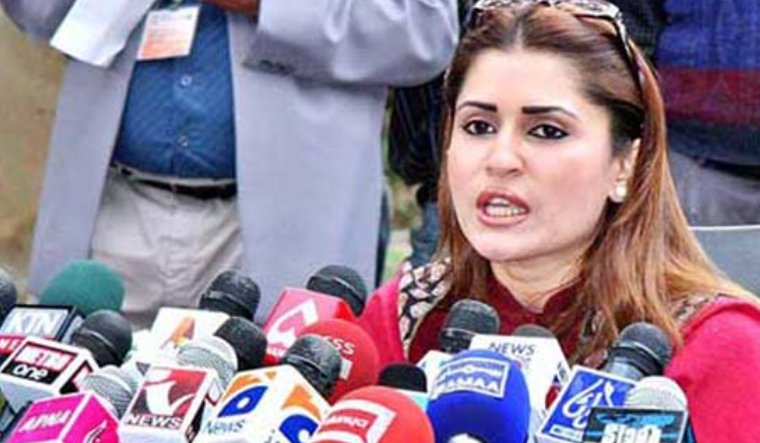
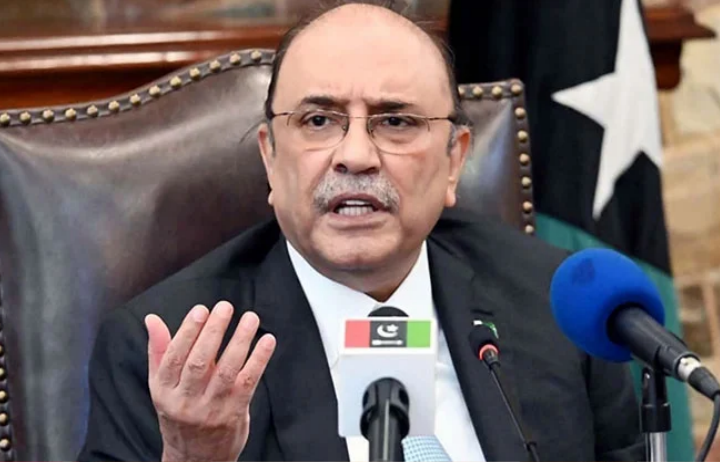
Central Information Secretary of Pakistan Peoples Party Parliamentarians, Ms. Shazia Marri,


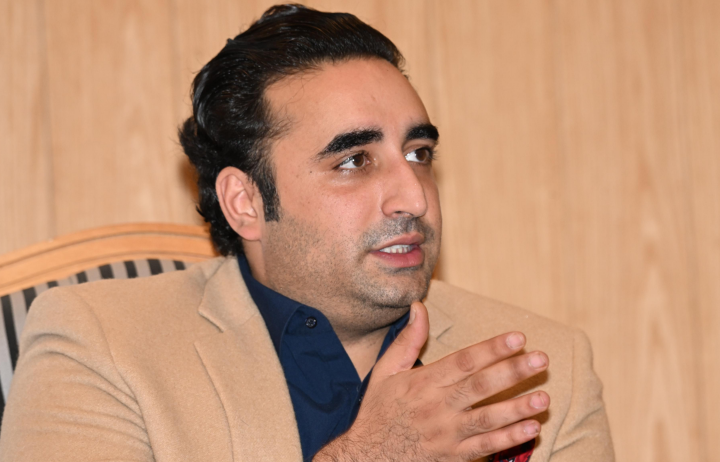
Central Information Secretary of Pakistan Peoples Party Parliamentarians, Ms. Shazia Marri, has said that Chairman Bilawal Bhutto Zardari believes strengthening the farmer means strengthening Pakistan itself.

In her statement, Shazia Marri said that Bilawal Bhutto Zardari’s vision is clear — the true measure of progress lies in the prosperity of farmers. She added that during the PPP government, Pakistan moved from wheat shortage to becoming a wheat-exporting country, which was the result of farmer-friendly policies.

She said that Bilawal Bhutto Zardari has always stood by the farmers, advocating for timely procurement and fair prices. He wants to end all injustices faced by the farming community.

Highlighting the impact of climate change, Shazia Marri said that climate change poses a serious threat to every Pakistani farmer, and Bilawal Bhutto Zardari emphasizes the need for investment in sustainable and climate-resilient agriculture. He envisions a modern agricultural economy where small farmers progress through technology and access to fair markets.

She said the Pakistan Peoples Party believes that insurance, credit access, and transparent governance are essential to protect farmers from the negative effects of climate change.

Shazia Marri appreciated the government’s decision to allow wheat procurement, terming it a longstanding demand of the PPP. She added that approving the support price for wheat was also a PPP demand; however, she noted that fixing the price at Rs. 4,000 instead of Rs. 3,500 per 40kg would have been more beneficial for farmers.

She further said that reducing the income tax from 45% to 15% is an important relief measure for the farming community.

Ms. Marri said that Bilawal Bhutto Zardari rightly reminds us that no economy can be strong if its farmers are weak. Under his leadership, the Pakistan Peoples Party remains committed to respecting, empowering, and reviving the agricultural sector for a prosperous Pakistan.

Senate climate body orders closing of gap between people and policies


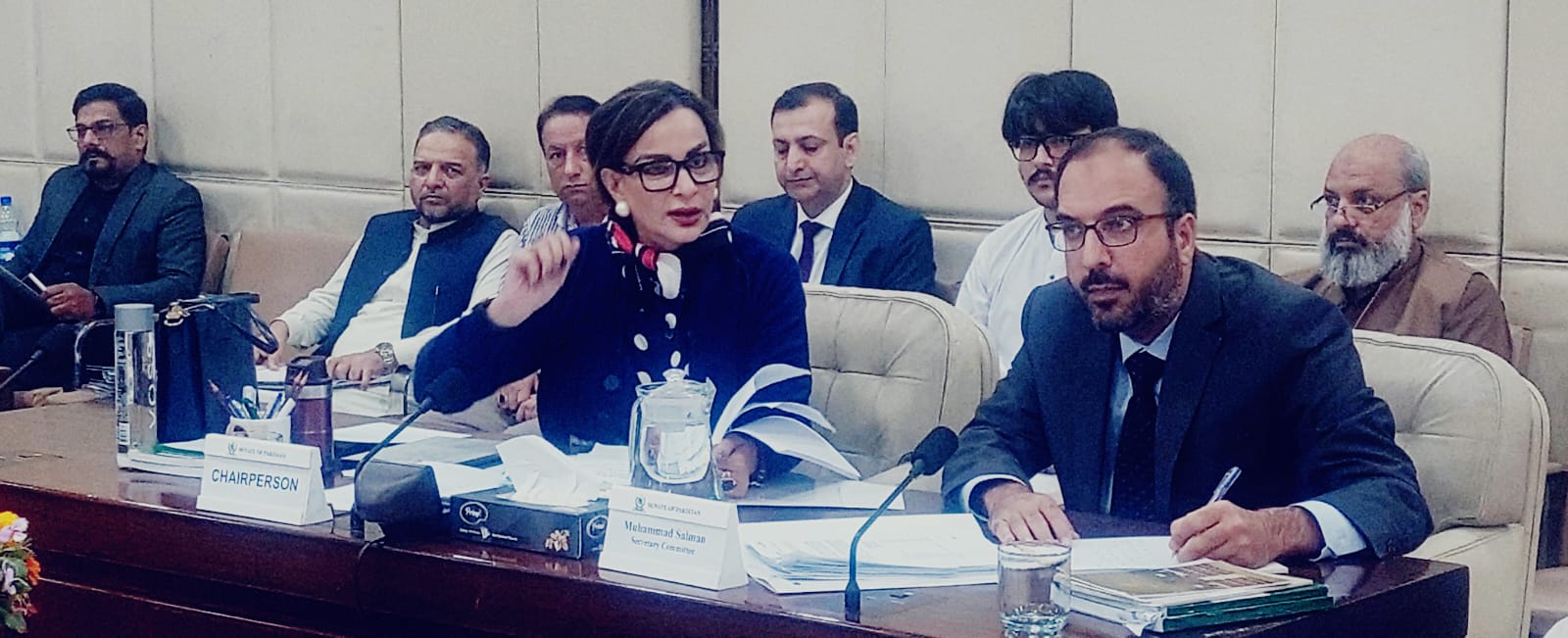
Chairperson of the Senate Standing Committee on Climate Change and Environmental Coordination, Senator Sherry Rehman, chaired a meeting of the Committee. The session was convened to review Pakistan’s preparations for the upcoming COP30 in Brazil, assess the country’s climate finance strategy, and evaluate progress on the implementation of the Single-Use Plastics (Prohibition) Regulations, 2023.

Senator Rehman observed that Pakistan’s Number 1 position in 2022 among climate-vulnerable countries stemmed from the catastrophic 2022 floods, and cautioned that the country is “sleepwalking into a resilience nightmare.” She emphasized that participation at COP30 must go beyond attendance and symbolic representation: “You go there for climate financing — not just to be seen. Pakistan must reclaim the climate leadership it once demonstrated when we successfully secured the Loss and Damage fund three years ago,” she said.

Senator Rehman expressed concern that Pakistan had lost traction on the international stage regarding Loss and Damage and climate finance since its landmark advocacy in 2022:
“We created enormous goodwill and built the operational committee for Loss and Damage, but since then, we have come crashing down. We must revive Pakistan’s climate diplomacy — especially on adaptation finance. This is not just about NDCs; it’s about survival.”
She termed the global disparity in climate funding “climate colonialism,” noting that $7 trillion continues to be spent annually on fossil fuel subsidies, while developing nations like Pakistan struggle for grants.

Senator Rehman noted that
•According to the World Bank, Pakistan requires $348 billion by 2030 to cope with climate impacts. Of this, $152 billion is needed specifically for adaptation and resilience. By 2050, climate inaction could cost Pakistan $1.2 trillion, while flooding alone may cost $90 billion and displace up to 400 million people, mostly in Punjab.
Current spending on adaptation is just 6% of what is required, creating a 16-fold gap in financing. In 2021, the domestic private sector contributed only 5% of total tracked climate finance, of which a mere 0.7%supported adaptation. Over 80% of all climate finance went to mitigation projects such as renewable energy.
Briefing the Committee, the Secretary Climate Change said that the upcoming COP30, to be hosted by Brazil, will focus on Nationally Determined Contributions (NDCs) and climate finance, as well as forests and oceans.
Senator Rehman noted that Pakistan remains the lowest in South Asia in forest cover, while its coastline is extremely polluted. She stressed the need for post-COP30 accountability and said:
“After COP30, this Committee will ask for a full assessment of Pakistan’s forest cover. During the floods, we saw entire regions like Chitral turn brown — that should never happen again. We should ask for Internationally Determined Contributions, along with submission of NDCs 3.0″
The Secretary apprised the Committee that Pakistan will be engaging in negotiations at COP30 from November 10 to 21, including on carbon credit trading with Korea. She added that the Loss and Damage Fund will become operational, though current financial commitments remain low, with $700 million in pledges requiring follow-up for disbursement.
Senator Rehman stressed the need for stronger provincial engagement in climate policy implementation:
“Use this Committee as a platform to work with the provinces. Without their involvement, no climate policy can succeed. Balochistan, in particular, must not feel remote or disconnected from national processes.”
Committee Members Senator Quratulain Marri and Senator Kakar both raised concerns about weak coordination and questioned whether provinces are receiving sufficient climate funding.
The Committee discussed the performance of the Meteorological Department, particularly during the August 19 heavy rainfall in Karachi.
Senator Quratulain Marri said that despite forecasts predicting a weakening monsoon, Karachi experienced one of its heaviest downpours of the year:
“The Meteorological Department even listed ‘Sindh’ as a district in its forecast — which shows how outdated its systems are.”
Senator Rehman added that the department’s grants were never properly utilized by previous governments, and that accountability was necessary for recurring forecasting failures. She proposed that NDMA and private weather platforms be engaged to strengthen early warning systems nationwide:
“Everyone is entitled to an early warning system. If the state can’t deliver timely alerts, we should work with those who can.”
The Committee also reviewed enforcement of the Single-Use Plastics (Prohibition) Regulations, 2023. Turning to plastic pollution, Senator Rehman called attention to the toxic and long-lasting impact of microplastics:
“Plastics are not just waste — they are chemicals. Some don’t dissolve for hundreds or thousands of years. These forever chemicals are linked to cancers, and the Indus is now the world’s second most polluted river choked with plastics.”
She noted that only 9% of plastics are recycled globally, and warned that by 2050, plastic waste will outweigh marine life in oceans. She expressed disappointment that global negotiations for a Plastics Treaty remain stalled due to lack of commitment from major producers:
“The big producers must commit to affordable, low-cost alternatives. Pakistan too must invest in recycling infrastructure — there is no recycling facility in Islamabad, and the city’s nullahs are choking with plastic waste.”
The Deputy Commissioner Islamabad briefed that enforcement measures include a fine of up to Rs. 1 million on manufacturers, and that visible progress has been made in curbing plastic bag usage in the capital. However, Senator Rehman directed that comprehensive recycling facilities be established to ensure long-term impact.
In conclusion, Senator Rehman stressed that climate finance, resilience, and accountability must remain at the centre of Pakistan’s national agenda.
“We cannot afford to be reactive anymore — the next climate disaster will not wait for us to coordinate. We need to move from policy to practice, from silos to synergy.”

Among those present were Senator Bushra Anjum Butt, Senator Naseema Ehsan, Senator Quratul Ain Marri, Senator Kakar and on zoom, Senator Sarmad Ali and Senator Dr.Zarqa Suharwardhy Taimur

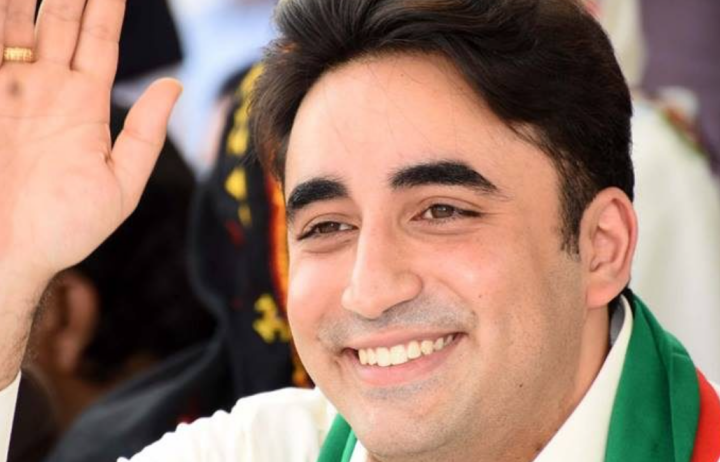
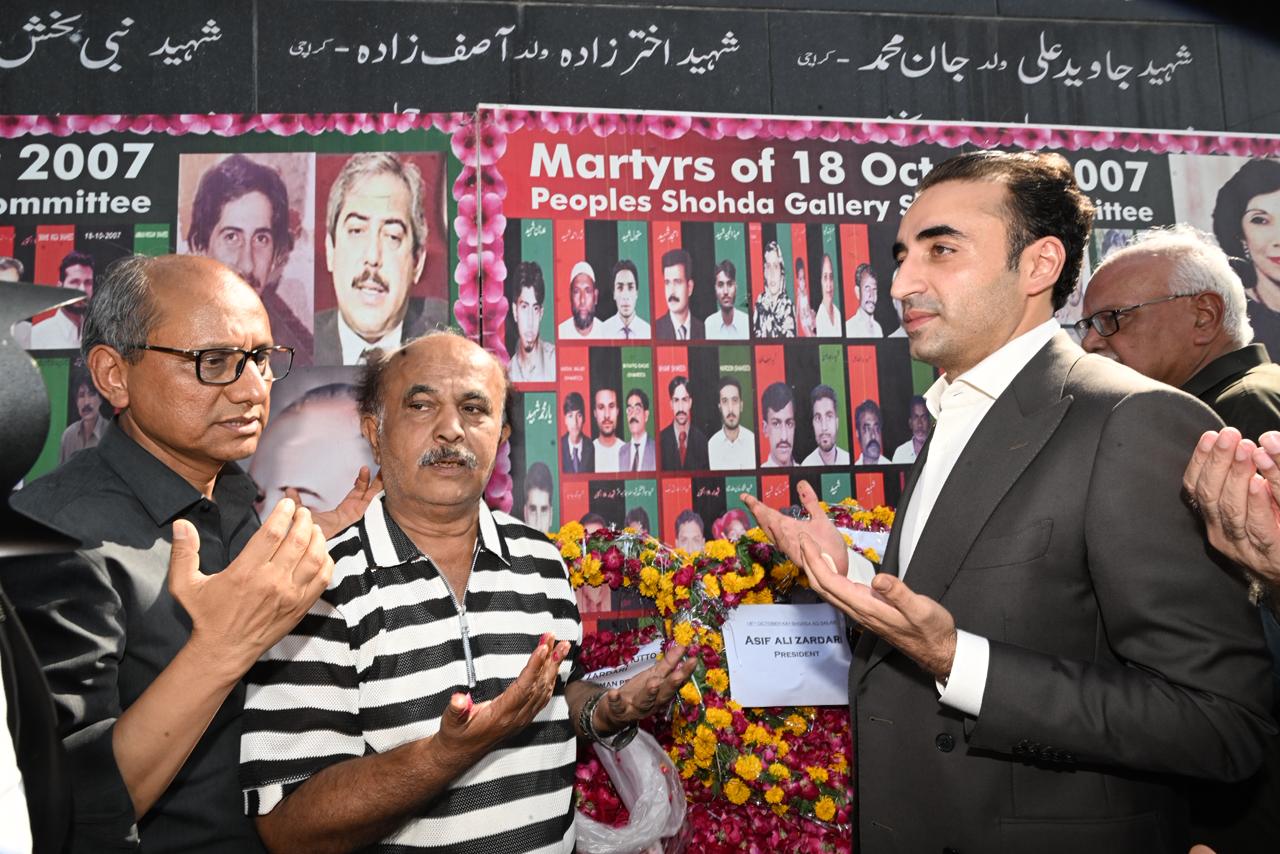
Chairman Pakistan Peoples Party (PPP) Bilawal Bhutto Zardari has paid rich tribute to Madar-e-Jamhooriat Begum Nusrat Bhutto on her death anniversary, remembering her as a symbol of courage


Chairman Pakistan Peoples Party (PPP) Bilawal Bhutto Zardari has paid rich tribute to Madar-e-Jamhooriat Begum Nusrat Bhutto on her death anniversary, remembering her as a symbol of courage, sacrifice, and steadfast commitment to democracy.

According to the press release issued by the Media Cell Bilawal House, Chairman PPP said in his message that Begum Nusrat Bhutto stood tall against tyranny and dictatorship, leading the struggle for democracy with unmatched grace and determination. “She was not only the devoted companion of Quaid-e-Awam Shaheed Zulfikar Ali Bhutto and the mother of Shaheed Mohtarma Benazir Bhutto, but also a guiding light for all who believe in freedom, justice, and equality,” he said.

He said that Begum Nusrat Bhutto’s sacrifices and resilience continue to inspire generations of Pakistanis, especially women, to stand firm in the face of oppression and to serve their nation with integrity and courage.

Concluding his message, Chairman Bilawal Bhutto Zardari reaffirmed his resolve to continue the mission of Madar-e-Jamhooriat — to uphold democracy, protect the rights of the people, and build a peaceful, progressive, and inclusive Pakistan.

President felicitates Ms. Sanae Takaichi on her election as Japan’s first female Prime Minister


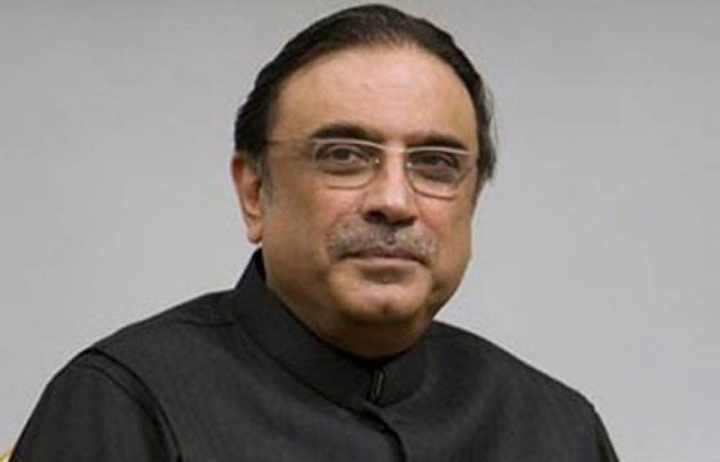
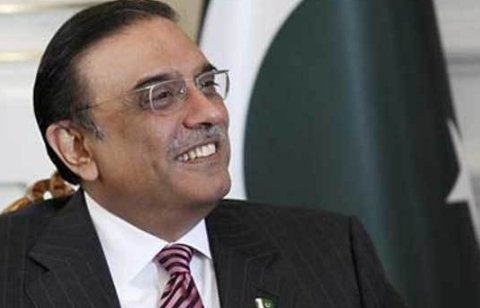
President Asif Ali Zardari has extended his heartfelt felicitations to Ms. Sanae Takaichi on her historic election as the first female Prime Minister of Japan.

The President said that her election marks a significant milestone in Japan’s political history and is a testament to the strength of its democratic traditions and commitment to gender equality.

He noted that while Japan has made history by electing its first woman Prime Minister, Pakistan had proudly chosen one of its finest daughters, Shaheed Mohtarma Benazir Bhutto, as the first female Prime Minister of the Muslim world almost four decades ago.

The President expressed confidence that under Prime Minister Takaichi’s leadership, Japan will continue to achieve progress and prosperity.

He also expressed the hope that the long-standing and friendly relations between Pakistan and Japan will be further strengthened in the years ahead.

President pays tribute to Shaheed Mohtarma Benazir Bhutto on Karsaz anniversary


President Asif Ali Zardari has paid tribute to Shaheed Mohtarma Benazir Bhutto and the martyrs of democracy on the 18th anniversary of the Karsaz tragedy.

The President said that Shaheed Mohtarma Benazir Bhutto returned to Pakistan on this day despite clear threats to her life. He said she remained resolute after the terrorist attack at Karsaz and continued her struggle for the restoration of democracy.

Recalling the events that followed, the President said that she visited hospitals and neighbourhoods the next day to meet the injured and console the bereaved families, reflecting her deep concern for her workers and the people of Pakistan.

President Zardari said that from that day until her martyrdom, her life and sacrifice have remained a source of guidance and strength for all those who stand for democracy and peace.

He said that as the nation continues to confront terrorism and extremism, the courage and sacrifice of the martyrs of the Karsaz tragedy reinforce our resolve to defeat all such forces.

Chairman Bilawal’s message on International Day for Eradication of Poverty


Chairman Pakistan Peoples Party (PPP) Bilawal Bhutto Zardari has reaffirmed his unwavering resolve to carry forward the mission of “Roti, Kapra aur Makaan” until poverty, inequality, and social injustice are completely eradicated from Pakistan. He said that Quaid-e-Awam Shaheed Zulfikar Ali Bhutto and Shaheed Mohtarma Benazir Bhutto devoted their lives — and ultimately embraced martyrdom — in their struggle for the dignity and rights of the poor and the oppressed.

According to the press release issued by the Media Cell Bilawal House, Chairman PPP, in his message on the International Day for the Eradication of Poverty, said that the Benazir Income Support Programme (BISP) — launched under the leadership of President Asif Ali Zardari during the previous PPP government — remains Pakistan’s most effective and transparent social protection mechanism. He described it as “a living legacy of Shaheed Mohtarma Benazir Bhutto’s vision — empowering women, uplifting families, and breaking the cycle of inherited poverty.”

Chairman Bilawal Bhutto Zardari urged the international community to recognize that climate change, conflict, and economic inequality are deepening global poverty and pushing millions toward despair. “It is time for the world to rise above geopolitical divisions and act collectively on humanitarian grounds to build a just, equitable, and sustainable global order,” he added.

President Zardari Strongly Condemns Cross-Border Attacks from Afghan Territory


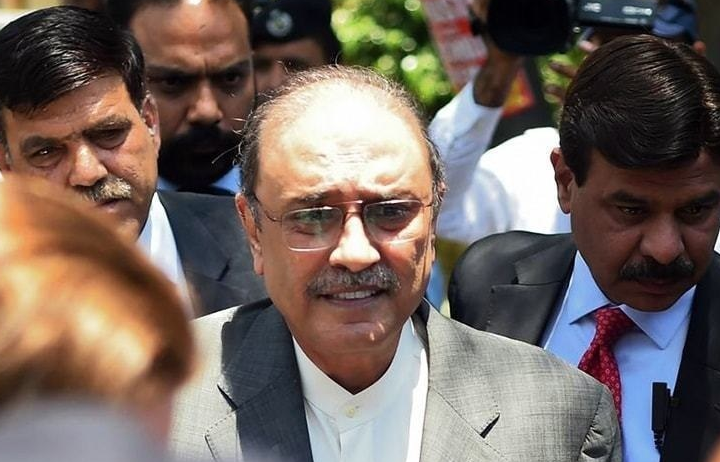
President Asif Ali Zardari has strongly condemned the unprovoked cross-border attacks launched from Afghan territory on Pakistani border posts in the Spin Boldak area of Balochistan and the Kurram sector of Khyber Pakhtunkhwa.

The President termed the attacks a blatant violation of Pakistan’s sovereignty and territorial integrity, and an unacceptable act of aggression. He commended the professionalism and valour of Pakistan’s Armed Forces for effectively repulsing the assaults and defending the country’s borders.

President Zardari observed that the Afghan Taliban regime remains in constant violation of the Doha Accord by providing safe sanctuaries to terrorist groups that continue to attack regional countries, thereby destabilising the entire region including Pakistan. He further noted that the regime has failed to establish a broad-based and representative government in Afghanistan and continues to monopolise power to the exclusion of other political and ethnic groups.

The President called upon the authorities in Kabul to ensure that Afghan soil is not used for acts of terrorism or hostility against Pakistan. He emphasised that such provocations undermine regional peace and the long-standing bonds of brotherhood between the peoples of Pakistan and Afghanistan.

The President reaffirmed that Pakistan desires peaceful, cooperative relations with all its neighbours, but any act of aggression will be met with a firm and resolute response.

President lauds services of outgoing Australian High Commissioner


Outgoing Australian High Commissioner Mr. Neil Hawkins paid a farewell call on President Asif Ali Zardari at Aiwan-e-Sadr today.

The President commended him for his efforts in strengthening Pakistan–Australia relations during his tenure. He said the High Commissioner’s contributions had helped advance cooperation in political, economic, and defence areas, while also deepening people-to-people connections between the two countries.

President Zardari noted that Pakistan and Australia have long enjoyed friendly and cooperative relations, supported by shared interests and mutual respect. He said the two countries must continue to build on their partnership.

On economic ties, President Zardari said that while bilateral trade is growing, it still falls short of its true potential. He emphasised the need to intensify efforts to expand bilateral trade and investment opportunities.

The High Commissioner informed the President about his recent visit to Sindh and briefed him on the ongoing cooperation between Pakistan and Australia in the fields of agriculture and climate change. He said that he and his family are carrying fond memories of Pakistan, especially the warmth and hospitality of its people. Mr. Hawkins also remarked that Pakistan’s impressive ethnic, linguistic, religious, and culinary diversity makes the country dynamic and vibrant.

Wishing Mr. Hawkins success in his future endeavours, President Zardari said he hoped the High Commissioner would take with him warm memories of Pakistan and its people.

President Asif Ali Zardari has reaffirmed that Pakistan remains firmly committed to safeguarding its national interests, regional sovereignty, and security.


The President stated that Pakistan will never accept any disputed or misleading position on Jammu and Kashmir, reiterating that India’s unlawful claims over the territory are contrary to international law and the United Nations Security Council resolutions.

President Zardari said it is unfortunate that the current Interim Afghan administration has turned away from the just struggle of the oppressed people of Indian Illegally Occupied Jammu and Kashmir, thereby doing injustice to both history and the Muslim Ummah.

He noted that attacks launched from the territory of the Interim Afghan Government by India-backed Khawarij terrorists are a well-documented reality, confirmed in successive United Nations Security Council monitoring reports. Pakistan, he said, has repeatedly made it clear that its civilians and security personnel are being targeted through the nexus of the Indian sponsored Khawarij and  other terror groups. 

President Zardari urged the Interim Afghan government to take concrete and verifiable action against anti-Pakistan terrorist elements operating from the Afghan soil. He emphasised that terror menace of the Khawarij and other terror groups sponsored by India remain the greatest threat to regional peace and stability.

“Terrorism is a shared challenge and its burden cannot be placed on any single country,” the President remarked.

He said Pakistan has demonstrated Islamic fraternity and exemplary neighbourliness by hosting millions of Afghan refugees for over four decades. The dignified repatriation of Afghan citizens, he added, is in the interest of both countries and essential for sustainable peace.

President Zardari reaffirmed that Pakistan will continue to support the educational and humanitarian needs of the Afghan people, but no compromise will ever be made on Pakistan’s national sovereignty.

He recalled that Pakistan has extended every possible facilitation to Afghanistan in trade, economic connectivity, and people-to-people exchanges. Mutual cooperation and economic partnership, he said, are the foundation for lasting peace and regional prosperity.

President Zardari underscored that Pakistan desires a peaceful, stable, and prosperous Afghanistan. He said brotherly relations must be based on mutual respect, security cooperation, and a shared commitment to regional peace.

The President expressed hope that the Interim Afghan Government will prevent its soil from being used by Khawarij and India-backed terrorist elements against Pakistan, stressing that only joint and practical measures can guarantee enduring peace in the region.

President of the Islamic Republic of Pakistan, Message on the occasion of World Mental Health Day 10th October, 2025


Today, as the world observes Mental Health Day, I extend my solidarity to all those in Pakistan and around the globe who live with mental health challenges. This year’s theme reminds us that mental health is not an isolated concern, it is fundamental to our personal well-being, our families’ stability, our communities’ cohesion, and the progress of our nation. Good mental health is the foundation upon which human dignity, productivity, and hope are built.

Pakistan faces immense pressures like economic, rapid urbanization, natural disasters, displacement, poverty, and the lingering effects of conflict and trauma. These factors leave invisible scars on the minds and hearts of our people. Studies show that around 24 million Pakistanis require some form of mental health care. Depression and anxiety affect nearly one in five adults, while severe conditions such as schizophrenia and bipolar disorder impact 1–2% of the population. Yet, our country has only about 500 trained psychiatrists to serve a population of over 240 million.

Recognizing this challenge, the Government of Pakistan, through the Ministry of National Health Services, has taken a series of steps to integrate mental health into the broader public health system. Mental health services are being introduced at primary health care facilities, while tele-mental health platforms are extending access to those in remote and underserved areas. Community health workers are being trained to identify symptoms early and provide support, while awareness campaigns are tackling stigma and misinformation.

We are also striving to strengthen the policy and legislative framework around mental health, so that it receives its rightful place in national health planning. Increased allocations for mental health in the national budget, the expansion of school-based counseling programs, and partnerships with universities and NGOs are all part of this growing effort. These steps are vital milestones toward building a healthier Pakistan.

However, the state alone cannot win this battle. Families must support open dialogue and compassion. Schools must foster resilience and provide safe spaces for children to share their struggles. Workplaces must adopt policies that protect employees’ mental health and well-being. Religious, cultural, and community leaders have a vital role to play in breaking down stigma and encouraging early help-seeking. Together, society can ensure that no Pakistani feels ashamed or isolated for facing a mental health challenge.

On this World Mental Health Day, I urge every citizen to become an ambassador for kindness and understanding. Speak up against stigma. Support your friends, neighbors, and colleagues. If you are struggling, know that seeking help is an act of strength, not weakness.

As President, I reaffirm my pledge that mental health will remain a national priority. Together, let us build a Pakistan where every individual has the opportunity to live with dignity, hope, and resilience, free from the shadows of stigma and neglect.

May Allah Almighty guide our efforts and grant healing and strength to those in need.