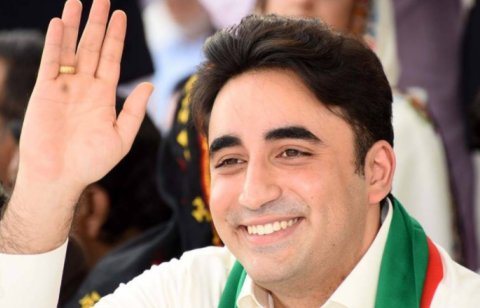
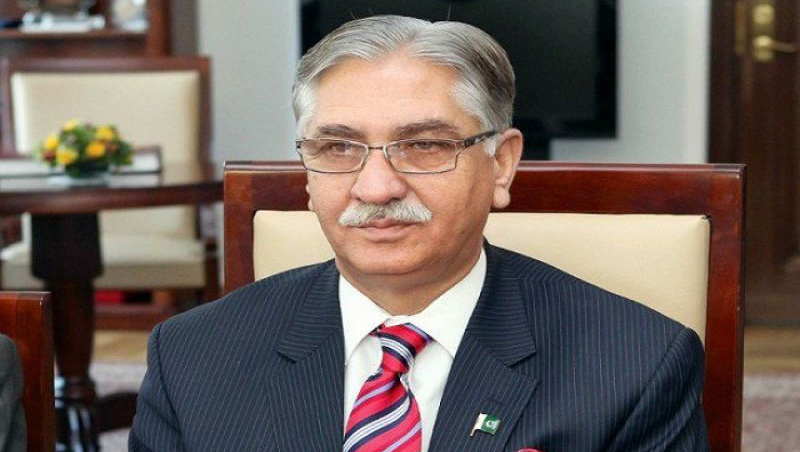
Chairman Pakistan Peoples Party (PPP) Bilawal Bhutto Zardari has described wetlands as the lifelines of our environment.

Chairman Pakistan Peoples Party (PPP) Bilawal Bhutto Zardari has described wetlands as the lifelines of our environment, food security and climate resilience, and called for urgent collective action to safeguard them, warning that when wetlands are destroyed, nature is silenced—and it is always the poorest and most vulnerable who pay the highest price.

According to the press release issued by the Media Cell Bilawal House, the PPP Chairman said in his message on World Wetlands Day that Pakistan—among the countries most vulnerable to climate change—cannot afford to neglect its wetlands, including rivers, lakes, mangroves and fragile deltaic systems. He pointed out that Sindh’s wetlands and mangroves have, for generations, shielded coastal communities from disasters and sustained millions of livelihoods, stressing that their protection is not only an environmental necessity but a matter of social justice.

Reaffirming the PPP’s commitment, Chairman Bilawal Bhutto Zardari said the party believes climate action must place people at its heart, safeguard natural resources and ensure sustainable development for future generations. He urged governments, communities and youth to become guardians of wetlands, emphasizing that harmony between people and nature is the path to a safer, greener and more hopeful future.

Message of President Asif Ali Zardari on World Interfaith Harmony Week

On the occasion of World Interfaith Harmony Week, observed from 1 to 7 February 2026, I extend my warm greetings to the people of Pakistan and to the international community. This observance reminds us of the shared values of peace, compassion, mutual respect and coexistence that lie at the heart of all faiths and belief systems.

Pakistan is a society enriched by religious, cultural and ethnic diversity. Our Constitution guarantees freedom of religion and equal rights for all citizens, regardless of faith or creed. These principles reflect the vision of Quaid-e-Azam Muhammad Ali Jinnah, who emphasised tolerance, unity and harmony as the foundation of our nation. World Interfaith Harmony Week offers an important opportunity to reaffirm our collective commitment to these ideals.

Interfaith understanding has a direct bearing on the daily lives of ordinary citizens. Where harmony prevails, children attend school without fear, places of worship remain open and secure, neighbourhoods function with trust and livelihoods are pursued with dignity. Conversely, intolerance and division disrupt social life, strain local economies and erode the sense of safety that families depend upon. Promoting respect and dialogue among faiths is therefore not an abstract principle but a practical necessity for social stability and well being.

Interfaith communication is more crucial than ever in an era marked by conflict, division and growing intolerance. Genuine engagement, education and open dialogue among followers of different religions are essential to counter prejudice and misunderstanding. Beyond its moral importance, interfaith harmony is vital for social cohesion, sustainable peace and shared progress.

Islam, like all great religions, upholds justice, peaceful cooperation and respect for human dignity. The values of compassion, kindness and tolerance resonate across all religious traditions and remind us that our common humanity is stronger than our differences. By fostering understanding and rejecting extremism in all its forms, we can build trust and solidarity within our societies.

I commend the efforts of religious leaders, scholars, educators, civil society organisations and young people who are working to promote dialogue and harmony among communities. Their contribution is essential in nurturing a culture of respect, countering hatred and guiding future generations to see diversity as a source of strength.

On this occasion, let us renew our resolve to uphold the values of interfaith harmony, protect the rights of minorities and work together for a peaceful and inclusive world. May this week encourage thoughtful action, informed dialogue and mutual respect.

Pakistan remains committed to promoting interfaith harmony at the national and international levels and to contributing constructively to global peace and understanding.

1973 Constitution a Social Contract between people and the government, Says Nayyer Hussain Bukhari

Secretary General of Pakistan People’s Party Parliament, Nayyer Hussain Bukhari stated that, Federal management is not a suitable solution for the city of Karachi. Nayyer Bukhari said that,  before passing any statements the people should read constitution of Pakistan thoroughly, for such a move, the approval of the residuality in the Constitution and the resulting provincial assembly is required to approve the resolution of the resolution.

In a statement Nayyer Bukhari said that, The doors of Parliament are open to all, providing a platform for everyone’s concerns. MQM can try to flex its muscles. Under the constitution of 1973, every province has a right to operate within their defined boundaries.

Nayyer Bukhari in a statement said that, we all are upset at the tragic incident of Gul Plaza. For the very first time in history, the Mayor of Karachi was elected from PPP.

Nayyer Bukhari stated that, The then-Mayor of Karachi’s 1987 decision to permit illegal constructions without emergency plans is questionable. Bukhari also said, I would also advise the PML-N government not to resort to populist tactics. If they approach our leadership with a genuine intent, we will articulate our position.

“The Feminisation of Injustice must stop” – Sherry Rehman

Vice President of the Pakistan Peoples Party Senator Sherry Rehman called for a decisive expansion of women’s political, economic, and social space, warning that climate change, inequality, and weak implementation of laws continue to disproportionately affect women and girls across Pakistan.

She said this during her keynote at the WOW Conference organized by the British Council under the topic “Expanding Women’s Space in a Decade of Resilience and Climate Challenges,” Senator Rehman began by drawing attention to what she termed the feminisation of injustice.
“In every disruptive frontline — conflict, pandemic, climate catastrophe, or digital warfare — women and children are disproportionately harmed. And the harm is not always collateral. Far too often, it is deliberate,” she said. “Many of us have come to realize that if there is one thing the traditional ‘rights of man’ project still strategically tolerates, it is the universality of the feminization of injustice.”

She reminded the audience that women’s rights have never been gifted through benevolent democratic evolution. “Even in the oldest democracies, women secured the right to vote only after force-feeding, imprisonment, and public vilification. Pakistan’s own women’s movement, which peaked at the turn of the last century, faced arrests, lashings, and systemic indignities under authoritarian laws,” she said, noting that these laws were only partially reversed when Benazir Bhutto’s party, and later other democratic forces, came to power.

Referring to Shaheed Benazir Bhutto, Senator Rehman said her assassination by terrorists during the 2007 election campaign was a tragic reminder of the price women pay for challenging the norms. Her journey underscores one truth: women have never been handed rights as part of some benevolent democratic continuum. Quite the opposite.”
Turning to gender parity as unfinished business, Senator Rehman said that since the Beijing Platform for Action was signed by 189 governments in 1995, progress has remained deeply uneven. “The United Nations tells us that at current global trends, gender parity in political leadership is still 130 years away,” she said.

Reflecting on her own parliamentary journey since 2002, she noted that while legislation mandating women’s political participation for political parties eventually became law, many critical protections took far longer. “The Harassment at the Workplace law took four years. The Child Marriage Restraint law took nine. The Domestic Violence law took twenty-one years,” she said. “This taught us that progress is rarely linear. Someone else may pass the law you began, but women — always women — keep the flame alive. And legislation without implementation remains cosmetic.”

Senator Rehman underscored that women constitute 49.2% of Pakistan’s population, yet their political representation stands at just 17%, despite women contributing nearly 50% of parliamentary work. “This is a clear gap between contribution and authority,” she said. At the global level, women hold only 27.2% of parliamentary seats, and only 29 countries currently have women heads of government.

Addressing economic participation, she said Pakistan’s female labor force participation rate remains at 22.7%, even though women make up 45% of the agricultural workforce. “Yet women own only 2% of agricultural land. This is a structural injustice that limits economic empowerment and decision-making,” she said, adding that 72% of water collection in Pakistan is carried out by women and girls, significantly increasing their unpaid labor burden.

Highlighting the scale of gender-based violence, she revealed that 32,617 cases have been registered nationwide, yet only 5% of perpetrators are convicted, while 64% of cases are dismissed. Nearly 70% of incidents go unreported due to fear, stigma, and lack of institutional trust. “Gender-based violence is not just a women’s issue; it is a question of national security, justice, and governance,” she emphasized.

Senator Rehman also spoke extensively on the gendered impacts of climate change, stating that women and girls are the most affected during climate disasters. Referring to the 2022 floods, she said 1,000 health facilities were destroyed, disrupting services for 650,000 pregnant women, while economic stress pushed 18% more girls into early marriage. She noted that Pakistan’s agriculture sector consumes 90% of national water resources, making climate-resilient and gender-responsive policies imperative.

She underscored key initiatives aimed at women’s empowerment and climate resilience, including the training of 17,000 women in climate-smart agriculture between 2018 and 2022, direct cash transfers to women through the Benazir Income Support Programme, and immediate flood relief measures. She also noted that 2 million homes were allocated in women’s names after the floods, stressing that land and housing ownership significantly enhance women’s autonomy and bargaining power within households and communities.

Calling for systemic reform, Senator Rehman urged mandatory gender analysis in all public policies, the use of gender-disaggregated data, and the meaningful inclusion of women in climate policy formulation and resource allocation. She emphasized that men and boys must be partners in achieving gender equality and cited evidence showing that countries led by women experienced lower COVID-19 mortality rates due to empathetic, science-based governance.

Concluding her address, Senator Sherry Rehman reaffirmed that every girl has the right to complete education, every woman has the right to paid employment, and every woman has the right to live safely — at home, in public spaces, online, and at the workplace. She stressed that women’s representation in public life must be proportional to their population share and that expanding women’s leadership across all sectors is essential to building a resilient, inclusive, and just future for Pakistan.

Sherry Rehman Urges Formation of Expert Committees to Oversee Tree Cutting & Plantation

Chairperson of the Senate Standing Committee on Climate Change, Senator Sherry Rehman chaired a detailed meeting on the extensive tree cutting and felling reported across Islamabad, stressing the urgent need for expert committees, transparency, public consultation, and adherence to environmental protocols.

Senator Rehman noted that
“Islamabad’s green spaces are essential to conserve. Our forest cover is the lowest in the region—only 5%.”

Senator Rehman urged the Ministry of Climate Change & Environmental Coordination (MoCC&EC) to establish expert committees—including wildlife specialists, ecologists, environmentalists, and civil society representatives—on parks and tree management.
“Tree plantation and tree removal are highly technical processes. We need proper committees, sub-committees, experts on board, and credible public hearings,” she said.

Minister of State for National Health Services Dr Malik Mukhtar presented some startling statistics of Islamabad’s record-breaking pollen load of 82,000 grains per cubic meter in 2022, far above the dangerous threshold of 1,500, with paper mulberry contributing 94% of the total load. He added that the United States and Australia have officially recognised paper mulberry as a noxious weed and eradicated it in regions such as Florida and Queensland, which influenced Pakistan’s approach to mitigation. According to the Minister, Islamabad’s pollen allergy burden has already shown signs of decreasing following control measures. He further clarified that while an exaggerated figure of 80,000 trees had circulated in the media, only 29,115 paper mulberry trees were actually removed, primarily from F-9 Park and Shakarparian, under a three-step eradication protocol followed by the health authorities. For every mulberry tree removed, he said, three indigenous and non-allergenic species were planted, in accordance with the recommended environmental safeguards.

Responding to criticism, the Chairman of the Capital Development Authority (CDA) Muhammad Ali Randhawa stated that the authority manages multiple development and environmental projects across Islamabad, and all plantation records can be formally verified. He reiterated that under the CDA Development Policy, the authority is required to plant three new trees for every one tree removed, a standard that has been consistently followed. Providing figures, he noted that at Jinnah Square, 3,500 existing trees were recorded while 6,300 new saplings were planted, and around the Shaheen Chowk underpass, 7,500 new trees were added. He further informed the committee that CDA’s Gardeniya Hub nursery has raised a stock of 1.2 million plants, ensuring a steady supply for ongoing and future plantation drives.

The Chairman also briefed the committee on enforcement actions, confirming that 13 FIRs have been registered against individuals involved in fire-related incidents damaging green areas. On the issue of paper mulberry, the Chairman stated that the CDA consulted independent doctors and specialists from NIH and PIMS, and that the Supreme Court had granted approval for the removal of the species due to its documented health impacts. He added that in F-9 Park alone, 12,800 paper mulberry trees were removed and replaced with 40,000 environmentally friendly indigenous species. He noted that a public hearing was also held in F-9 Park to ensure public input and transparency in the decision-making process.

Senator Rehman said the public’s concerns must be removed through credible, transparent processes.
“It is the capital city of Pakistan; its green spaces are essential to conserve and preserve. We must add to Islamabad’s natural green cover, not diminish it,” she said.

She concluded by urging MoCC&EC and CDA to establish a proper consultation and coordination matrix, and expert-led committee structure, ensuring that environmental protection remains central to development planning.

The meeting was attended by Senators Syed Waqar Mehdi, Khalida Ateeb, Bushra Anjum Butt, and Sarmad Ali. Officials from MoCC&EC, Chairman CDA Mr Randhawa, Minister of State for National Health Services Dr Malik Mukhtar and Minister of State for Interior, Mr. Talal Chaudhary, also participated in the meeting.

First Lady briefed on free clubfoot treatment initiatives

First Lady Bibi Aseefa Bhutto Zardari met Chief Executive Officer of Prime Hospital Healthcare Facility (PHHF), Dr Shahzad Shafiq Musavi, at Aiwan e Sadr and received a briefing on ongoing initiatives aimed at the treatment of clubfoot deformity in children, particularly in underdeveloped areas of Sindh.

During the meeting, Dr Musavi shared details of PHHF’s efforts to provide free diagnosis and surgical treatment for children affected by clubfoot, including the organisation of specialised camps and collaboration with international surgical teams. The First Lady was briefed on the scale of the programme and its focus on restoring mobility and improving quality of life for affected children.

It was explained that clubfoot, medically known as Congenital Talipes Equinovarus (CTEV), is one of the most common congenital deformities and a leading cause of preventable childhood disability. The First Lady was informed that through timely, free-of-cost intervention, PHHF has conducted over 1,621 outpatient assessments and successfully treated 252 children, demonstrating that the condition is fully treatable when addressed early and systematically.

The First Lady appreciated the humanitarian focus of the initiative and underlined the importance of sustained attention to preventable and treatable childhood disabilities. She noted that access to timely medical care can play a decisive role in enabling children to lead dignified and productive lives. She assured Dr Musavi of her full support for efforts aimed at eradicating this serious public health issue.

Senate Parliamentary Leader PPP, Senator Sherry Rehman, Syed Naveed Qamar, MNA, and Ms Shazia Marri, MNA, were also present during the meeting.

First Lady briefed on free clubfoot treatment initiatives

Islamabad: 20 January 2026 — First Lady Bibi Aseefa Bhutto Zardari met Chief Executive Officer of Prime Hospital Healthcare Facility (PHHF), Dr Shahzad Shafiq Musavi, at Aiwan e Sadr and received a briefing on ongoing initiatives aimed at the treatment of clubfoot deformity in children, particularly in underdeveloped areas of Sindh.

During the meeting, Dr Musavi shared details of PHHF’s efforts to provide free diagnosis and surgical treatment for children affected by clubfoot, including the organisation of specialised camps and collaboration with international surgical teams. The First Lady was briefed on the scale of the programme and its focus on restoring mobility and improving quality of life for affected children.

It was explained that clubfoot, medically known as Congenital Talipes Equinovarus (CTEV), is one of the most common congenital deformities and a leading cause of preventable childhood disability. The First Lady was informed that through timely, free-of-cost intervention, PHHF has conducted over 1,621 outpatient assessments and successfully treated 252 children, demonstrating that the condition is fully treatable when addressed early and systematically.

The First Lady appreciated the humanitarian focus of the initiative and underlined the importance of sustained attention to preventable and treatable childhood disabilities. She noted that access to timely medical care can play a decisive role in enabling children to lead dignified and productive lives. She assured Dr Musavi of her full support for efforts aimed at eradicating this serious public health issue.

Senate Parliamentary Leader PPP, Senator Sherry Rehman, Syed Naveed Qamar, MNA, and Ms Shazia Marri, MNA, were also present during the meeting.

Senate Committee Unanimously Approves Sherry Rehman’s Bill to End Plastic Wrapping of Books

Vice President of PPP and Chair of Senate Standing Committee on Climate Change Senator Sherry Rehman has sought to ban the growing use of plastic covers on every book in Pakistan, calling it an environmentally harmful and dangerously new toxic practice . Senator Rehman stated that “Plastic is a forever chemical which is a huge environmental toxin. It cannot be introduced into our daily lives in a new retail endeavour to keep single use plastics in circulation when the world is discarding it.”

Advocating for her bill during a meeting of the Interior Senate Standing Committee, Senator Sherry Rehman underscored the importance of protecting our environment and public health from a toxic new trend of wrapping books routinely in plastic , despite the severe environmental and health consequences associated with plastic use. She noted that plastic is known now to be the “forever chemical ” that can take up to 1,000 years to fully decompose and is a major contributor to human health crises as well as environmental disasters. “It is a terrible hazard to public health because it chokes our rivers, storm drains landfills and coastlines, leaving more chemical and micro plastics in our food, soil, water and environment than we of the planet can sustain. While we struggle to put just Islamabad on the journey to be free of single use plastics , we now how book distributors and retailers now resorting to this totally unnecessary mass adoption of plastic for “covers” which is a bizarre reversal of environmental safeguards that should govern our consumption habits.

Senator Rehman emphasized that booksellers and publishers must take responsibility for discouraging this habit by discontinuing the use of plastic wrapping. She urged authorities to provide a clear and reasonable time frame to book sellers to ensure the complete phase-out of plastic covers.

Citing alarming global statistics, she stated that over 7 billion tons of plastic waste have been generated worldwide, of which only 9 percent has been recycled. In Pakistan, the situation is even more critical, with only 1 percent of plastic waste being recycled — a figure she described as dangerously low.

“If the Senate can give up plastic, then bookshops can do the same,” Senator Rehman remarked, underscoring the need for collective action to protect the environment.

The Interior Senate Standing Committee unanimously passed Senator Sherry Rehman’s bill aimed at preventing the use of plastic covers on books, marking a significant step forward in Pakistan’s efforts to reduce plastic pollution and promote sustainable practices.

President Zardari condemns Kabul blast, expresses solidarity with Chinese nationals, calls for full implementation of Doha Peace Agreement

President Asif Ali Zardari has strongly condemned the bomb blast at a Chinese restaurant in Kabul, which has resulted in the loss of several lives and left one Chinese national injured and one reported dead. He expressed deep grief over the casualties and extended heartfelt condolences to the families of the victims.

The President conveyed sincere sympathy with the injured and their families and prayed for their early recovery. He paid tribute to the spirit of Chinese citizens who have continued to work for the development of Afghanistan despite rising insecurity and serious risks to their lives.

President Zardari noted that the Taliban regime in Afghanistan has failed to honour the commitments made under the Doha Peace Agreement, particularly the obligation to prevent the use of Afghan soil for the export of terrorism.

He recalled that Pakistan has repeatedly stressed that no terrorist groups should be allowed safe havens in Afghanistan and that regional peace and security must be upheld. The President said that it is not just Pakistan but other neighbours of Afghanistan, including Tajikistan have recently been affected by the terrorists operating out of Afghan soil.

The President further stated that the failure to establish a broad based and inclusive government by the Taliban is contrary to the Doha Agreement. He emphasised that full implementation of the agreement, in letter and spirit, along with concrete steps to end cross border terrorism, remains essential.