Message of the President of the Islamic Republic of Pakistan on the Occasion of the International Day for Countering Hate Speech

On the occasion of the International Day for Countering Hate Speech, I join the international community in reaffirming the importance of promoting respect, tolerance and understanding among people of all faiths, backgrounds and cultures. Hate-driven narratives, prejudice, incitement and discriminatory attitudes not only undermine social harmony but also pose serious threats to peace, human dignity and peaceful coexistence among nations. In today’s interconnected world, the spread of hatred is no longer confined to a particular society or region. It transcends borders and affects collective peace, stability and development.

Islam is a religion that upholds the values of compassion, tolerance, justice, moderation and respect for humanity.

The Holy Qur’an guides us to adopt civility, wisdom and righteousness in our speech and conduct. Allah Almighty says:
“O believers! Be mindful of Allah, and say what is right.” (Qur’an 33:70)
The Holy Qur’an further instructs:
“Speak kindly to people.”(Qur’an 2:83)
Allah Almighty also says:
“Repel evil with what is better.” (Qur’an 41:34)
The Holy Prophet Muhammad (peace be upon him) said:
“Whoever believes in Allah and the Last Day should speak good or remain silent.” (Sahih al-Bukhari and Sahih Muslim)
He also said:
“A Muslim is one from whose tongue and hand the Muslims are safe.” (Sahih al-Bukhari)

In the digital age, social media and modern communication platforms have significantly expanded opportunities for expression. However, this freedom carries a responsibility to ensure that our words are guided by truth, wisdom and respect for others. Irresponsible discourse and hate-filled content fuel division, mistrust and violence, thereby weakening the fabric of society.

Pakistan is a diverse society comprising people of different faiths, sects, cultures and linguistic backgrounds. Our Constitution guarantees equal rights, religious freedom and the dignity of every citizen. Our collective strength lies in unity, mutual respect and tolerance. It is therefore imperative that we continue to promote interfaith harmony, inter-sect understanding, constructive dialogue and national cohesion.

Hate speech affects people in their daily lives, whether in schools, workplaces, places of worship or online spaces, creating divisions and undermining mutual trust within communities.

On this occasion, I call upon religious scholars, educators, media professionals, civil society organizations, academic institutions and particularly our youth to play an active role in countering hate-based narratives and fostering a culture of respect, empathy, and constructive engagement. The challenge of hate speech cannot be addressed through legal measures alone. It also requires education, moral development and sustained efforts to build awareness and understanding.

Let us reaffirm our responsibility to ensure that our speech, writing and conduct reflect the highest ethical values and the teachings of our faith. Each of us has a role in shaping the tone of public discourse. By choosing respect over hostility and dialogue over division, we can help build a society where differences are addressed through understanding rather than hatred.

May Allah Almighty bless Pakistan with peace, stability, unity and prosperity, and guide humanity towards greater understanding, harmony and mutual respect.

Pakistan Zindabad.

.

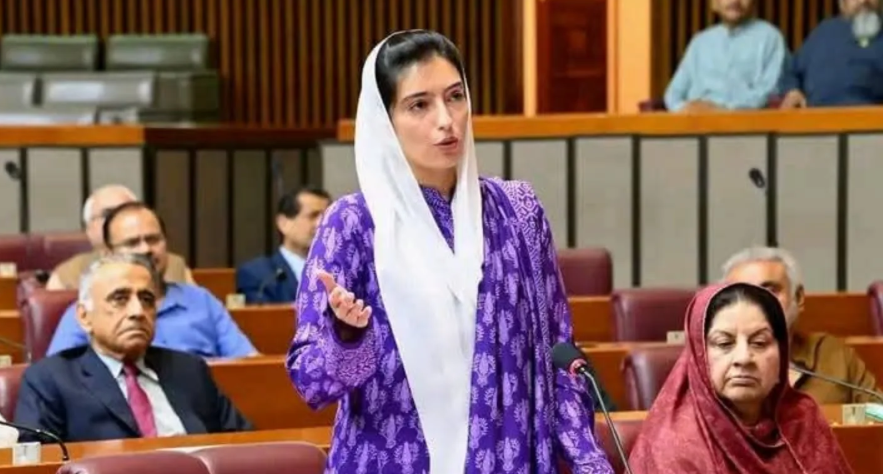
Vice President of the Pakistan Peoples Party Senator Sherry Rehman, while speaking in the Senate today

Vice President of the Pakistan Peoples Party Senator Sherry Rehman, while speaking in the Senate today, congratulated the nation on what she termed a major diplomatic achievement, highlighting Pakistan’s constructive role in facilitating peace efforts amid tensions between Iran and the United States.

“Pakistan invested in hope, dialogue and diplomacy. The international community has acknowledged and appreciated these efforts” she said.

She noted that Prime Minister Shehbaz Sharif had acknowledged the contributions of President Asif Ali Zardari, PPP Chairman Bilawal Bhutto Zardari and the wider political leadership in supporting these diplomatic efforts.

Referring to the broader regional impact of peace, Senator Rehman said that stability in the Strait of Hormuz would strengthen global energy security, improve supply chains and contribute to greater price stability.
“We hope that reduced tensions will ultimately help bring down oil prices globally and in Pakistan, easing inflationary pressures and providing relief to ordinary citizens, particularly vulnerable households already struggling with rising costs,” she added.

“With almost 45 percent of our population living below the poverty line, lower international energy prices offer much-needed relief to ordinary citizens. Peace is not only a diplomatic achievement; it is also an economic necessity for millions of people,” she said.

Based on this Senator Rehman said that while the current budget offered economic stabilisation it does not solve growing fundamental challenges.

Referring to the Rs 18 trillion federal budget, she called for a more equitable taxation structure that increases direct taxation while reducing dependence on indirect taxes and sales taxes that disproportionately impact lower-income groups.
“The country’s fundamental problem is that it is living on borrowed money, which is clear when you see almost 50 percent of expenditures go into debt servicig. To change that Pakistan has to broaden the taxation pool, which is no rocket science. Trade and service sectors need to contribute far more to national revenues to be able to fix the gaping hole at the heart of the budget. At the same time Pakistan cannot continue relying on the same taxpayers while large segments of the economy remain undertaxed,” she said.

Senator Rehman said that only regressive levies that leached money away from the federal divisible pool were growing instead of being tapered off to the provinces as sales taxes, so that social spending can he enhanced. Our provinces have to yield up taxation to the federal government there will be no expenditure on social programs. She expressed serious concerns over the continued expansion of the petroleum levy, noting that it was originally introduced as a temporary measure.
“There is a clear difference between a tax and a levy. Levies do not flow to the provinces, while provinces are responsible for delivering health, education and other essential public services. When levies continue to rise, provinces lose fiscal space and are often forced to cut development spending. The petroleum levy is increasingly functioning like a sales tax which diverts money from the provinces, she said.

She added “Provinces have demonstrated stronger performance in taxing services whereas there is a crisis of revenues not matching expenditures at the centre.

Reiterating the importance of provincial empowerment, Senator Rehman said that increasing levies under the guise of taxation should not come at the expense of provincial financial rights.
“Health and education are delivered largely through the provinces. If we want better outcomes for our citizens, provinces must have the fiscal space and resources necessary to perform these responsibilities effectively,” she said.

Senator Rehman noted that approximately 42.8 percent of the federal budget was being absorbed by debt servicing, including both interest and principal repayments.
“When nearly half of the federal budget is consumed by debt obligations, the space available for development, social protection and public investment becomes severely constrained,” she said.
On the expenditure side we see a complete imbalance. An entire country’s PSDP plan costs less than the expenses of the federal government. At rupees one trillion the federal government is not just running ministries that should have devolved long ago but it is also erecting more parallel structures like Authorities to go along with redundant federal ministries. This is a recipe for government bloat. At the same time state-owned enterprises continue to place a staggering burden on public finances.
“Losses of state-owned enterprises reached Rs 832.848 billion in FY2025, with cumulative losses now standing at Rs 6.563 trillion. Yet another Rs 451 billion has been allocated to SOEs in this budget. This is a structural challenge that cannot be ignored indefinitely,” she added.

Senator Rehman welcomed the removal of the 18 percent sales tax on sanitary pads and contraceptives, describing it as an important step towards improving affordability and access to essential products for women and families.
She further stressed the need to create stronger incentives for businesses, stimulate growth and address unemployment, which currently stands at approximately 7 percent.

Senator Rehman also expressed concern over declining climate allocations despite Pakistan’s growing climate vulnerabilities.
“It is deeply concerning that climate-related levies are being collected with no clear path of those funds into decarbonisation. Especially while climate financing remains inadequate and climate budgets continue to shrink. Pakistan is among the countries most vulnerable to climate change, and this is precisely the time when climate investment should be increasing, not decreasing,” she said.

She noted that climate impacts were already affecting agricultural productivity and food security.
“Pakistan was once a net exporter of major commodities such as wheat, cotton and sugar. Today, climate pressures and longstanding structural challenges have increased our dependence on imports. This trend should concern all policymakers,” she warned.

Concluding her remarks, Senator Rehman called for a more inclusive budget-making process, where tax collection gaps were addressed. One of the better solutions might be to give sales tax on goods to provinces as well, given the fact that their record of collecting is much better than FBR. She urged consultations to begin in January well before the presentation of the next budget.

.

Chairman Pakistan Peoples Party Bilawal Bhutto Zardari has welcomed the conclusion of the Peace

Deal between the United States of America and the Islamic Republic of Iran.

“I warmly welcome the conclusion of Peace Deal between the United States of America and the Islamic Republic of Iran, an important first step towards reducing tensions and advancing peace through dialogue. This positive development reflects the statesmanship and commitment of all parties involved.

“I commend Prime Minister Muhammad Shehbaz Sharif for his leadership and vision in facilitating this process, and Field Marshal Syed Asim Munir for his steadfast support for regional stability.

“I also acknowledge Deputy Prime Minister and Foreign Minister Senator Mohammad Ishaq Dar, the Ministry of Foreign Affairs, and the dedicated diplomatic teams from all participating countries whose professionalism, perseverance, and quiet efforts behind the scenes helped make this achievement possible.”

.

President expresses deep grief over PAF trainer aircraft crash near Mardan, pays tribute to martyred officers

The President of Pakistan, Asif Ali Zardari, has expressed deep grief over the crash of a Pakistan Air Force trainer aircraft near Mardan.

The President paid tribute to Flight Lieutenant Muhammad Qasim Abdullah and Lieutenant Taha Abbasi, who embraced martyrdom in the incident.

He prayed for the elevation of the ranks of the martyrs and fortitude for the bereaved families.

The President said the nation will always remember the sacrifices of its brave sons who laid down their lives in the defence of the homeland.

He also expressed heartfelt sympathy and condolences with the grieving families.

.

PPP Chairman Bilawal Bhutto Zardari said, “The imminent signing of the Islamabad accord marks a historic moment.

PPP Chairman Bilawal Bhutto Zardari said, “The imminent signing of the Islamabad accord marks a historic moment. At a time when the international spotlight is firmly on Pakistan, the ongoing unrest in Azad Jammu and Kashmir is damaging both the Kashmiri cause and Pakistan’s reputation. It is also creating an unnecessary opportunity for hostile actors and the India-Israel nexus to exploit the situation for their own purposes.”

He said, “I therefore appeal to all protestors to bring their demonstrations to a peaceful conclusion. Those individuals who have taken the law into their own hands should surrender themselves to the local authorities and allow due process to take its course.”

Bilawal Bhutto Zardari said, “All political grievances and disagreements must be resolved through democratic, constitutional, and peaceful means. Parliament and the political process—not the streets—are the appropriate forums for addressing and settling such issues.”

He said, “The Pakistan Peoples Party has already called upon the Election Commission to withdraw its premature election schedule. We remain committed to pursuing a political solution and would seek to establish a Truth and Reconciliation Commission to address outstanding grievances, move the process forward, and bring these matters to a just and lasting conclusion. The people of Kashmir should not have to endure repeated cycles of protest, confrontation, and uncertainty.”

The PPP Chairman further said, “If all stakeholders, including the Federal Government, are in agreement, the AJK Government could, in due course, review the notifications issued in relation to protesting parties. While there can be no compromise when it comes to upholding the rule of law and holding accountable those who have engaged in unlawful acts, we are equally committed to ensuring that individuals who have done nothing wrong are not made to suffer the consequences of the actions of others.”

.

Message from the President of the Islamic Republic of Pakistan on World Day Against Child Labour (12th June 2026)

Today, on World Day Against Child Labour, Pakistan joins the international community in reaffirming its resolve to protect children from exploitation and to ensure that every child can grow up in safety and attend school.

The protection of children is rooted in the Constitution of Pakistan. Article 11 prohibits slavery, forced labour and the employment of children in hazardous work, while Article 25-A guarantees free and compulsory education for all children between the ages of five and sixteen years. These provisions define a clear responsibility for the State to safeguard childhood and support education.

Child labour has direct consequences for a child’s life and future. A child engaged in work is often forced to leave school or fall behind in learning. This limits opportunity, weakens skills development and places additional pressure on families already facing hardship. Ensuring that children remain in education is therefore not only a matter of protection, but also of long-term social and economic well-being.

Pakistan continues to take steps at federal and provincial levels to reduce child labour and strengthen child protection efforts. The focus remains on prevention, enforcement of existing laws and support for children who need to return to education and a stable environment.

On this day, I call upon parents, employers, teachers, religious leaders, civil society and all citizens to play their part in protecting children from exploitation and keeping them in school.

A society is judged by how it treats its children. Every child in Pakistan must have the opportunity to learn, to grow and to build a secure future.

.

Chairman Pakistan Peoples Party (PPP) Bilawal Bhutto Zardari has said that children are not merely the future of the nation

Chairman Pakistan Peoples Party (PPP) Bilawal Bhutto Zardari has said that children are not merely the future of the nation but its most precious trust, and that a society cannot claim progress while its children are deprived of their right to education, safety, and a carefree childhood. Calling for renewed national and global commitment to ending child labour, he stressed that every child deserves a life filled with learning, hope, dignity, and opportunity—not exploitation, deprivation, and burdens beyond their years.

According to the press release issued by the Media Cell Bilawal House, the PPP Chairman, in his message on the occasion of the World Day Against Child Labour, pointed out that the 1973 Constitution—the historic gift of Quaid-e-Awam Shaheed Zulfikar Ali Bhutto to the nation—prohibits slavery, forced labour, and the employment of children in hazardous occupations, while also guaranteeing free and compulsory education for all children between the ages of five and sixteen. He said these constitutional safeguards reflect the state’s responsibility to protect children and secure their future.

Reaffirming the Pakistan Peoples Party’s commitment to the vision of Shaheed Mohtarma Benazir Bhutto, Chairman Bilawal Bhutto Zardari said that she firmly believed that every child, regardless of background or circumstance, deserves an equal opportunity to learn, grow, and contribute to the nation’s progress.

The PPP Chairman urged governments, employers, civil society, and communities to work collectively to eradicate child labour in all its forms and create conditions in which every child can live with dignity, security, and hope. “Let us build a society where children are known not by the work they are forced to do, but by the dreams they are empowered to pursue,” he concluded.

.

PPP Secures Majority in Gilgit-Baltistan Assembly, Says Nayyer Bukhari

Pakistan Peoples Party Parliamentarians Secretary General Syed Nayyer Hussain Bukhari has congratulated the party’s winning candidates in the Gilgit-Baltistan elections, saying the result reflects the public’s commitment to democracy and the legacy of the Bhutto family.

In a statement issued on Friday, Bukhari saluted the “Bhuttoist jiyalas” of Gilgit-Baltistan and thanked the region’s voters for supporting PPP candidates. He said the people had voted for a strong Pakistan and stable democracy.

“The conscious voters have ensured the victory of jiyala candidates for the sake of a strong Pakistan and stable democracy,” Bukhari said.

He noted that PPP Chairman Bilawal Bhutto Zardari’s slogan of people’s rule had resonated widely with the public. According to Bukhari, the outreach campaign led by Chairman Bilawal Bhutto Zardari and the presence of Shaheed Mohtarma Benazir Bhutto’s legacy during the campaign evoked the spirit of Quaid-e-Awam Shaheed Zulfikar Ali Bhutto.

Bukhari said the PPP had emerged as the majority party in the Gilgit-Baltistan Assembly. He added that the party’s elected members would contribute to the region’s development through constitutional and public service.

“The people’s democratic government of the PPP in Gilgit-Baltistan will fulfill all promises related to health, education, housing, and employment,” he said.

Bukhari affirmed that under Chairman Bilawal Bhutto Zardari’s leadership, the PPP remains committed to the manifesto, ideology, and principles of Shaheed Zulfikar Ali Bhutto and Shaheed Mohtarma Benazir Bhutto

.

President Zardari felicitates Swedish leadership on National Day

President Asif Ali Zardari has extended felicitations to the government and the people of the Kingdom of Sweden on their National Day.

​The President stated that Pakistan deeply values its long-standing and friendly relations with Sweden, established in 1949, which are built on a solid foundation of mutual respect and a shared commitment to international peace and cooperation.

​President Zardari expressed satisfaction with the steady progress of bilateral engagements, particularly in the fields of renewable energy, technology, telecommunications, textiles and agriculture as there is a vast potential to increase the bilateral trade volume. He reaffirmed Pakistan’s commitment to further strengthening and expanding these mutually beneficial ties in the years ahead.

.