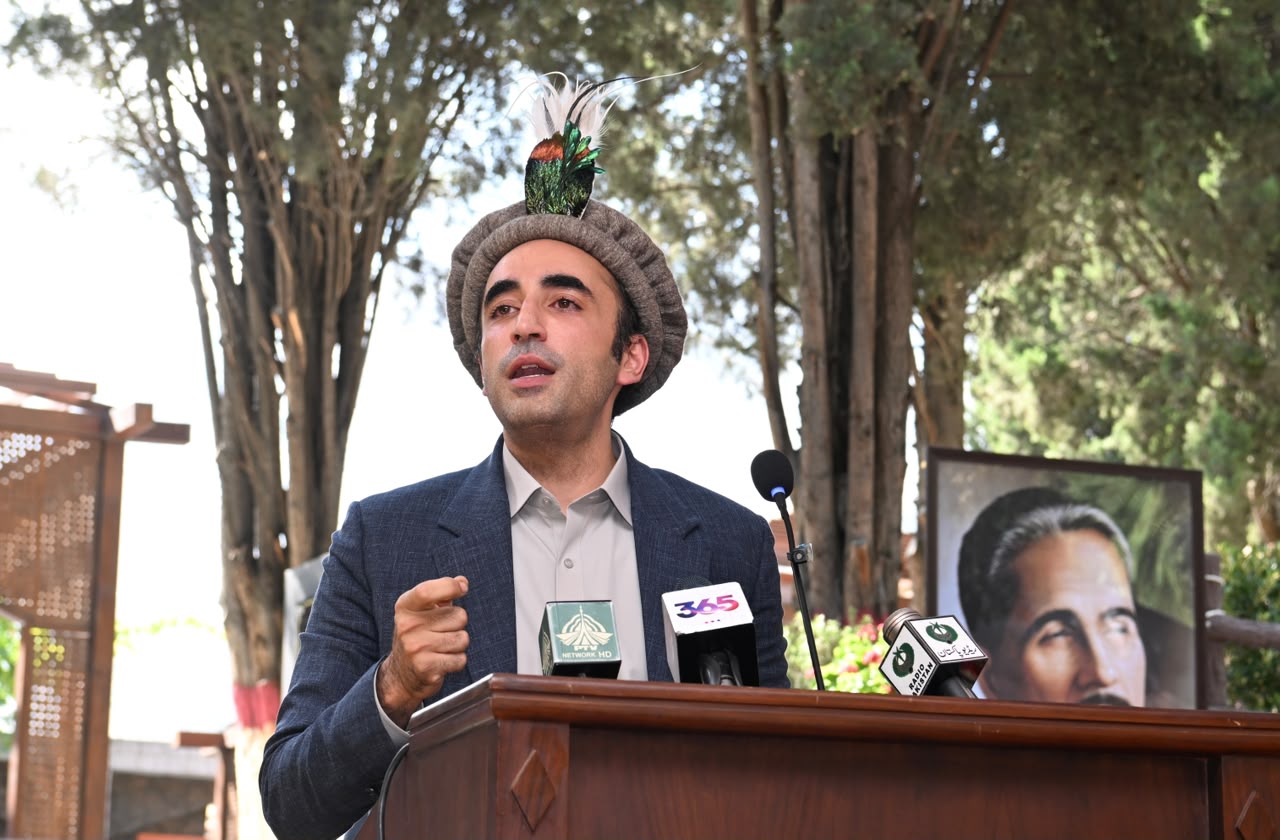
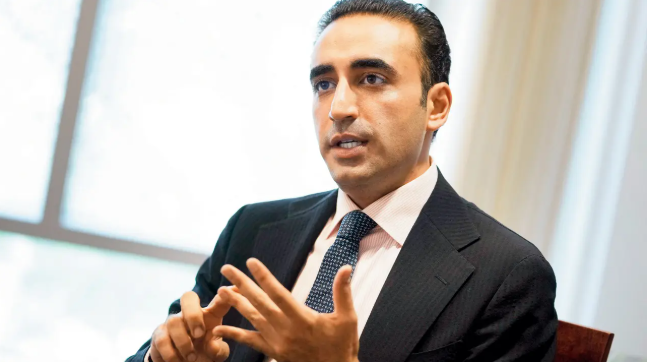
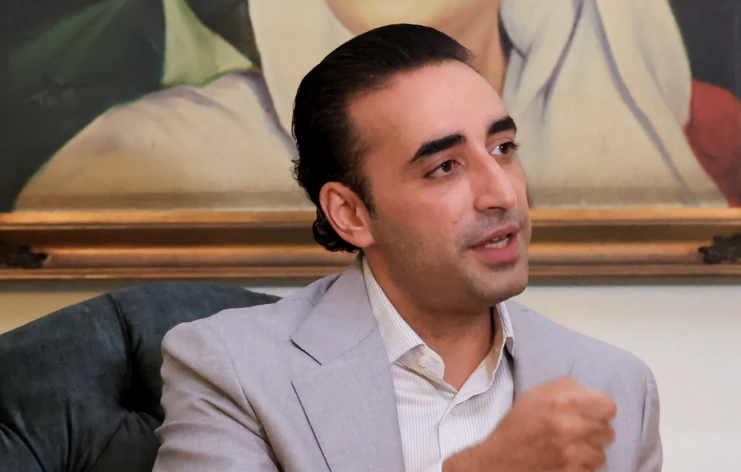
Chairman Bilawal addresses oath-taking ceremony in GB

Chairman Pakistan Peoples Party, Bilawal Bhutto Zardari addressing the oath-taking ceremony of the Chief Minister of Gilgit Baltistan, Amjad Advocate, said that the people of this region defeated the Dogra rule to gain independence. They joined Pakistan, and to this day, are waiting to be a part of it.

Chairman Bilawal said that Pakistan responded to the struggle of the people of GB by imposing the FCR system. The people of GB, till today, remember Quaid-e-Awam Shaheed Zulfikar Ali Bhutto who abolished the FCR system, and introduced subsidy for the downtrodden masses of GB. When Shaheed Mohtarma Benazir Bhutto got the opportunity, she laid the foundation for politics in GB. President Zardari gave GB administrative rights and identity. A new generation has emerged to continue the struggle of GB, he said.

Chairman PPP said that along with the interim status, GB should attain constitutional rights. He said he wants to see the day when the representatives of GB are sitting alongside him in the National Assembly, and the day is not far. He said that the people of GB have given him the mandate on three basic principles, which are the right to rule, the right to ownership and the right to employment. We shoulder the responsibility to convince the state, the federal government and political parties of Pakistan to give constitutional rights to GB. The right to ownership that the PPP has promised must be implemented by the provincial government. He said that his advice to the people after they attain the right to own their land would be to form farming collectives. Public-Private Partnership can also be incorporated, so that the profit directly reaches the people of GB. When it comes to the right to employment, PPP believes that it is the responsibility of the government of Pakistan and GB to provide employment to the youth. As part of the PPP’s manifesto, the CM has announced that employment will be provided based on merit.

Chairman PPP expressed his gratitude to the workers of PPP and people of GB. He said that he is grateful to PM Shehbaz Sharif for acknowledging the PPP’s mandate, and expressing support. He said that he wants to convey to the representatives of the PML-N that the PPP will not let them feel that it is on the treasury benches and they are on the opposition benches. He said that they will unitedly work to address the issues of the people. Chairman Bilawal also thanked the IPP for supporting PPP. He said that he wants to make a new example for politics in the region, as it has become synonymous with enmity in Pakistan. In GB, we will break this myth, and work together with other political parties. He also thanked the MWM and PTI-backed candidates for playing a role in the historic election of CM GB. For CM GB, every citizen would be treated the same regardless of their political allegiance.

Chairman Bilawal said that the PPP would want for the local body elections to take place in GB. We are aiming for these elections to take place prior to the winter season. Furthermore, the geo strategic importance of this region is evident to everyone. We would also like to salute the soldiers who are manning the toughest borders of the world in GB, Chairman Bilawal expressed. Those soldiers are protecting the lives of the people of GB and Kashmir, while facing India on the other side. The people of GB and Azad Kashmir do not only value the contribution of our soldiers, but are proud to host them.

Chairman PPP said that the clear message we want to send to India is that all Pakistanis, from the citizens of GB to those of Kashmir, are united in their struggle against their tyranny. Referring to the Modi government, he said that our armed forces and the nation have inflicted a historic defeat on them. Now, when they are unable to digest this reality, they have adopted the Israeli model. First, Israel attacked Iran, but when it produced no result, they attempted to provoke the Iranian people against their leadership to topple the regime. Israel’s conspiracy was unsuccessful, and we want to tell Modi that we know what his intentions are. We know what they are trying to do by using Afghanistan against Khyber Pakhtunkhwa and Balochistan. We also know that they are eyeing GB and Azad Kashmir, but our people want to send the message that this conspiracy will be rendered futile. Chairman Bilawal said that we salute the people of Iran, for defeating Israel militarily, and then also making its strategy to interfere in politics unsuccessful. The people of Pakistan will also follow suit and render all interference of India unsuccessful.

Chairman Bilawal said that India wants to use the River Indus against Pakistan. However, it should know that the Sindhu will be defended by the people of GB and Azad Kashmir, to those living along the borders of Sindh and Balochistan. From the people of GB, to those of Larkana, raise the slogan of “Marsoon Marsoon, Sindhu na Desoon”. We will not compromise on the Indus Water Treaty, and will be victorious on this issue too.

Chairman PPP further said that our manifesto for the elections in Azad Kashmir will be the same, consisting of the right to rule, the right to ownership and the right to employment. He said that just like GB, the young generation of Kashmir also wants to strive for its rights. He said that certain powers are trying to take advantage of this, but will never be able to do so. The PPP is not willing to let go of its three-generation long connection with Kashmir. The status quo under which Kashmir has been governed can no longer continue. The new generation wants to bring a new mindset. Chairman PPP said that while continuing our struggle on the international level, we should ponder on whether it is possible to empower the people of GB and Kashmir while preserving the protected status. It is possible in our eyes, and GB has paved the way for this.

Chairman PPP said that he invites the people of Kashmir to use their political rights. He said that it is unfortunate that some parties have announced that they would not be taking part in the elections. They should participate, and honour the decision of the people of Kashmir. If the PPP triumphs, we would want to hold a Joint Constitutional Convention for Azad Kashmir and GB. He said that he would like to see representatives of GB and Azad Kashmir in the National Assembly and Senate, be it on the interim basis as ambassadors. Chairman PPP said that while we are not ready to compromise on the rights and representation of the muhajireen. However, we are also not willing to compromise on Kashmir’s right to rule. Azad Kashmir and GB are the ‘Kohinoor’ of Pakistan’s economy, and will not only contribute to their regions but the entire country, Chairman PPP said. He concluded by saying that now because of the PPP jiyalas and Jiyalis, he can raise the slogan, “Panchon Soobon ki Zangeer, Benazir Benazir”.


.

President Zardari felicitates Canadian leadership on National Day

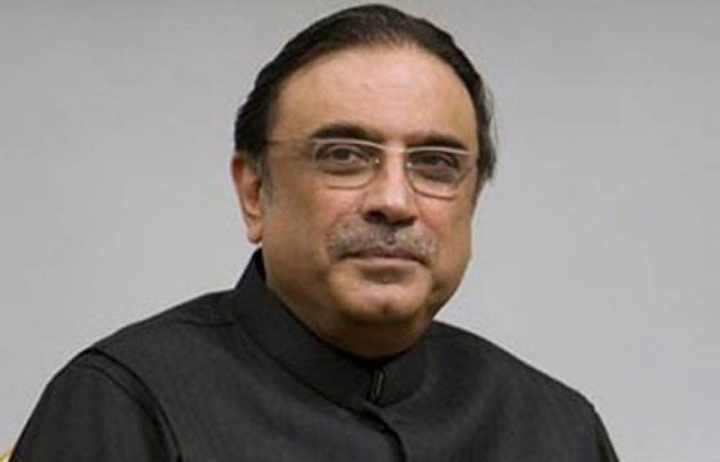
President Asif Ali Zardari has extended felicitations to the Governor General of Canada, Ms Louise Arbour, and the people of Canada on their National Day.

​The President said that Pakistan highly values its long-standing and friendly relations with Canada which are founded on mutual respect, shared interests and strong people-to-people ties. He expressed his confidence that bilateral cooperation between the two countries will continue to expand across areas of mutual interest including trade, investment, higher education and close collaboration in international forums.


.

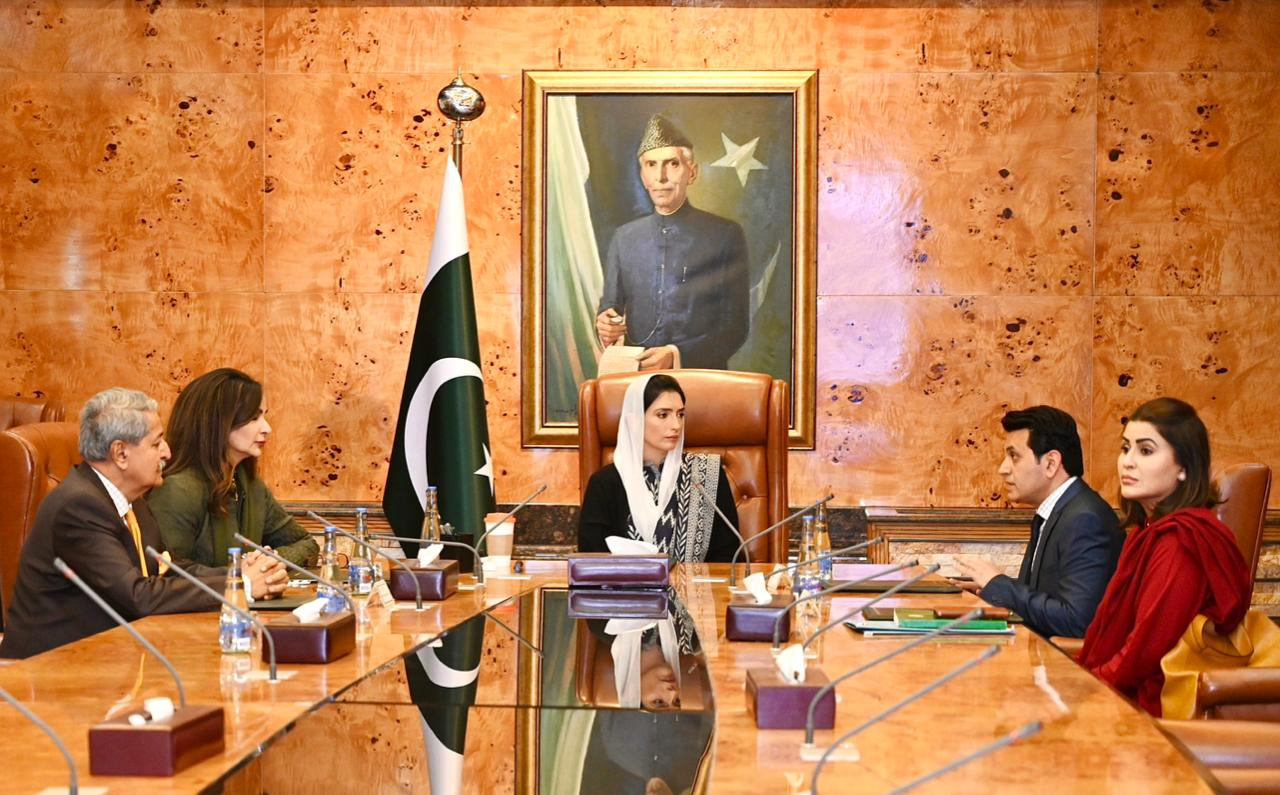
First Lady Bibi Asifa Bhutto Zardari, MNA, has congratulated Ms Han Seong-sook on her appointment as Prime Minister of the Republic of Korea.

First Lady Bibi Asifa Bhutto Zardari, MNA, has congratulated Ms Han Seong-sook on her appointment as Prime Minister of the Republic of Korea.

She said that Ms Han’s appointment reflects her distinguished record of leadership in the fields of technology, innovation and entrepreneurship. She noted that the appointment represents an important milestone for the advancement of women in leadership and public service.

“As the First Lady of Pakistan and as the daughter of Shaheed Mohtarma Benazir Bhutto, the first woman Prime Minister of Pakistan and the Muslim world, it is my singular honour and privilege to extend my heartfelt congratulations to you on your appointment as Prime Minister of the Republic of Korea. I wish you every success in the discharge of your important responsibilities,” she said.

Bibi Asifa Bhutto Zardari said that Ms Han’s appointment underscored the importance of women attaining leadership positions and contributing to national development.

The First Lady expressed confidence that Ms Han’s experience in promoting innovation and supporting small and medium-sized enterprises would contribute to the continued progress and prosperity of the Republic of Korea.

She also expressed the hope that, during Prime Minister Han Seong-sook’s tenure, the friendly relations and cooperation between Pakistan and the Republic of Korea would be further strengthened for the mutual benefit of the two countries and their peoples.


.

President Zardari felicitates Canadian leadership on National Day

President Asif Ali Zardari has extended felicitations to the Governor General of Canada, Ms Louise Arbour, and the people of Canada on their National Day.

​The President said that Pakistan highly values its long-standing and friendly relations with Canada which are founded on mutual respect, shared interests and strong people-to-people ties. He expressed his confidence that bilateral cooperation between the two countries will continue to expand across areas of mutual interest including trade, investment, higher education and close collaboration in international forums.


.

Chairman PPP, Bilawal Bhutto Zardari addressing an international seminar on Indus Water Treaty in Islamabad

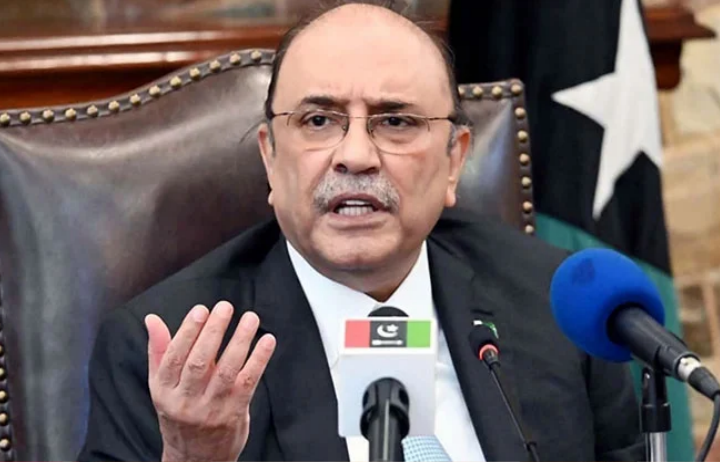
Chairman PPP, Bilawal Bhutto Zardari addressing an international seminar on Indus Water Treaty in Islamabad warned the world of the grave nature of suspending the Indus Water Treaty unilaterally by India and vowed to save Pakistan from the existential threat by any means.

Chairman Bilawal on his keynote speech said that we meet at a grave hour, at a time when the world has been reminded that a waterway is not merely geography, it is power, commerce, food, fuel and life. The world saw that the Strait of Hormuz become the centre of confrontation between Iran and the USA. Pakistan’s mediation through the Islamabad Memorandum of Understanding attempted to open that artery of the global economy. Iran and the USA agreed to the ceasefire. Closing of Hormuz was the weaponization of a waterway. Just as no ceasefire and no peace could be achieved between the US and Iran with the Strait of Hormuz shut, similarly, how can any ceasefire between India and Pakistan hold without the Indus Water Treaty being restored, Chairman Bilawal asked. What is true for the Hormuz is true for the Indus, with even greater intensity, as Indus carries the lives of nations. India had announced its intention to abandon the Indus Water Treaty as part of their unjustified assault on Pakistan last summer. It is a war that is internationally recognized as one that India lost. Even India’s greatest allies cannot help but marvel at the number of planes downed by Pakistan. Pakistan emerging victorious has reshaped the geopolitics in the region. The concept of propping up India as a net security provider in the region has been abandoned and the world has moved on.

However, I must caution, while Pakistan has stuck to the ceasefire, India has not, Chairman Bilawal stated. There were clear and explicit terms in the ceasefire which were to be discussed in a meeting at a neutral location where all the friction points were to be addressed. In the meantime, we were to return to normal, which entailed India returning to its obligations under the IWT. However, India has not done so. It is a question for Pakistan to answer whether we still abide by a ceasefire that leaves far too many questions unanswered. Just as one could not imagine warring parties agreeing to peace without a free-flowing Strait of Hormuz, how can Pakistan be expected to sustain a ceasefire when India continues to pose an existential threat? Let there be no ambiguity in Islamabad, New Delhi, Washington, Beijing, London and the United Nations, this is not a technical dispute, Chairman Bilawal stressed. This is not a clerical clash between commissioners, or a matter of paperwork, hydrology or administrative issues, but the weaponization of water. The IWT was not given as a favor to Pakistan, it was a solemn international settlement brokered in the shadow of partition and the rivers of Punjab and Sindh could have not been left on the mercy of anger. The World Bank states clearly that the treaty allocates the western rivers (Indus, Jhelum and Chenab) to Pakistan and eastern rivers to India, while allowing each side limited use of rivers allocated to the other. When India says it will place this treaty in abeyance, it is not merely suspending meetings, but threatening survival. What is Indus to Pakistan? It is not a river on the map, it is our bread, cotton, wheat, fields of Sindh, orchids of Punjab, waters of Khyber Pakhtunkhwa, channels of Balochistan. It is our farmer at dawn, our mothers drawing water, children eating roti, our worker in the mill and our prayer before the harvest.

To cut the Indus is not to pressure a government, but to threaten a people, Chairman Bilawal said. Pakistan has over 200 million souls no state, no PM, no army, no court, no parliament, no political party, and no generation has the right to stand silent while the lifeline of those souls is placed under the shadow of coercion. We must speak with the seriousness that this situation demands. Pakistan must treat every step towards the strangulation of its waters as a national security assault, not merely as a diplomatic irritant, or a footnote in a foreign ministry brief, or another file to be moved from one desk to another. It must be treated as an attack on the foundations of the state.

This does not mean that Pakistan seeks war, Chairman Bilawal stated. We do not seek war, we have buried too many sons and seen too much blood in this region. We know the price of adventurism, and the tragedy of miscalculation. Peace is not surrender, restraint is not paralysis, diplomacy is not silence and patience is not permission. If India wants the world to take its threat seriously, Pakistan must compel the world to take our survival seriously. Our message must be clear, any move to block, divert, manipulate or potentially politically control Pakistan’s rightful waters will not be treated as routine engineering. Every survey, tender, canal proposal, dam design or every concrete step towards changing the flow guaranteed to Pakistan must be treated as a strategic warning signal. It must trigger the state’s response, be it legal, economic, political, diplomatic, informational, national security preparedness or even military response.
Chairman Bilawal said that Pakistan should not allow India to climb the ladder of coercion while we remain trapped issuing statements of concern. The strangulation of water is an existential threat, and we cannot remain silent while it is prepared, financed, designed, tendered and normalized. A nation does not wake up only when the riverbed is dry, a nation wakes up when the first stone is moved to sabotage our future. It is only rational to ask what are we doing in terms of military preparedness as India continues to pursue such measures. Pakistan must not make a single move that concedes India’s illegal position. We must not behave as though India’s decision is fait accompli. We must not build policy on the assumption that the treaty is dead. We must not rush to create downstream substitute dams in a way that tells the world India has succeeded, and now Pakistan is adjusting. We must not give the impression that we were victorious on the battlefield but have surrendered on the banks of the river. Pakistan’s position must remain immovable, the treaty lives, and Pakistan’s rights live. The Indus does not become India’s instrument because it has discovered the language of abeyance. Projects and dams already approved before India’s unilateral decision should continue on their own merit. Pakistan must complete what it has already planned, we must strengthen our dams, reservoirs, barrages, canals and flood management systems because Pakistan needs water security regardless of India’s aggression. Let us be precise, there is a difference between strengthening Pakistan and accepting India’s blackmail. There is a difference between national resilience and diplomatic surrender, there is a difference between preparing for scarcity and legitimizing theft. We must move on a war footing for water conservation. We must modernize irrigation, reduce waste in canals and invest in drip irrigation as well as smart agriculture. We must make every drop count not because India has the right to steal our water, but because Pakistan has a duty to respect its own future.

We must explore every source outside the scope of the treaty, Chairman PPP said. Desalination of our coasts, water recycling for our cities, climate-resilient water storage, regional water cooperation and even long-term feasibility of bringing water from Central Asia through negotiated corridors and sovereign agreements. Let engineers dream, let planners calculate, let diplomats negotiate and let the state act with imagination, Chairman Bilawal said. Do not confuse resilience with retreat, the Indus Water Treaty must be defended in every forum, be it the World Bank, United Nations, international courts, arbitrary bodies, friendly capitals, whether Muslim, western, African or Asian. The world now needs new law. Straits used for international navigation are governed by transit passage principles. Ships and aircrafts enjoy a right of passage that shall not be impeded. International water law also rests on the equitable and reasonable utilization, prevention of significant harm and prior notification of measures that may adversely affect other states sharing water courses. International humanitarian law recognizes that water installation and irrigation systems are indispensable for civilian survival. The ICRC has warned that the deprivation of water is a method of warfare and is strictly prohibited. Yet, the age we are entering demands more.
Chairman Bilawal said that we need a new international convention against the weaponization of waterways, it must apply to maritime chokepoints like the Hormuz and transboundary rivers like the Indus. It must prohibit the use of civilian water dependency as a coercive instrument. It must create emergency injunctions against unilateral treaty suspensions, and impose automatic international scrutiny on projects that threaten downstream survival. It must recognize that water coercion is not merely unfriendly conduct, but aggression by other means. The 20th Century feared the bomb, the 21st Century must also fear the faucet controlled by a hostile hand, Chairman PPP stated.

Addressing the Indian neighbors, Chairman Bilawal said that they cannot build greatness on the thirst of another people. You cannot call yourself a civilization while threatening another civilization’s river. You cannot speak of democracy while placing millions under a hydrological siege. You cannot invoke development by turning water into a weapon. The Indus is older than both our flags. It has seen empires come and go, it has seen kings, colonizers, conquerors, generals, viceroys, PMs and presidents. They all passed, the river remained and Pakistan will remain.

We must understand the nature of the conflict before us. It is not confined to one front and is not only the matter of borders, Pakistan is being targeted through proxies, propaganda, economic pressures, attempts at diplomatic isolation, hybrid warfare, politics of fear and now through the politics of water. This is war by other means. When a state seeks to isolate you, destabilize you, blame and bleed you, then threaten the river that sustains your people, you are already in a war of national survival, Chairman Bilawal said. Whether guns are firing every day or not is not the only test of war. The test is whether the life of the nation is being targeted.

Let us rise above the parties, provinces, factions and petty quarrels that have so often weakened us, Chairman PPP urged. The Indus does not belong to one government, party or province. It belongs to Pakistan and to history. Let there be unity in the Parliament and clarity at the GHQ, let there be resolve in the foreign office. Let there be urgency across the government, he said. We do not ask for charity, but demand law. We do not ask for sympathy, but demand justice. We do not ask for permission to live but assert our right to life. Pakistan must say to the world that the Indus cannot be held hostage, Chairman Bilawal said. The treaty cannot be suspended by arrogance, the river cannot be turned into a weapon and the thirst of children cannot become the policy of a neighboring state. Pakistan must say to India, do not mistake our divisions for weakness, restraint for fear, our appeal to law for lack of resolve. We have survived partition, war, terror, floods, dictatorships, sanctions, conspiracies, betrayal and we are still here. The Indus made us patient, fertile and stubborn. If anyone believes Pakistan will surrender the Sindhu, they do not know Sindh, Punjab, Khyber Pakhtunkhwa, Kashmir or Gilgit Baltistan. They do not know the people who have lived by these rivers for thousands of years. We want peace, but peace with dignity. We want coexistence but not submission.

From this seminar, this city and this moment onwards, let the message be that Pakistan will defend its water, people, treaty, sovereignty and future. It is in public literature on Pakistan’s deterrence posture, economic strangulation has long been treated as one of the gravest thresholds and stopping the Indus has been understood as falling within this category. When India weaponizes water, it is not merely violating a treaty but pushing South Asia towards the edge of strategic catastrophe. If we see an attack on our rivers as a military assault, we must respond militarily as well. Let the world understand the danger of what India has done, no power however large, arrogant or intoxicated could impose an existential defeat upon Pakistan. A nation does not defend its life at the final moment but the first warning, Chairman Bilawal said.

The Indus is not a bargaining chip or a weapon to be placed in India’s hands. It is a lifeline of Pakistan, and any attempt to turn it into a noose must be treated as a threat to the survival of our state. This is the message that Pakistan must deliver to India and the world. Peace in South Asia will not be preserved by pretending coercion is harmless, but only when India understands that the rivers of Pakistan cannot be touched without shaking the foundations of regional stability. If the international community does not build new law against the weaponization of waterways, then every downstream nation will one day become hostage to the ambitions of an upstream power. Pakistan must therefore lead the argument not as a beggar, victim or state pleading for sympathy, but warning the world that the path India has opened is one towards catastrophe. The treaty lives, Pakistan’s rights live, and Pakistan will not surrender the Sindhu, Chairman PPP said.

Water strangulation destroys people by hunger, thirst, crop failure, disease, migration and social collapse. Therefore, Pakistan must not allow the world to hide behind technical language. India will call it a ‘treaty dispute’, ‘administrative abeyance’, ‘hydropower’, ‘development’ or an engineering survey. A dam is not merely a dam when it is built on the throat of a nation. Pakistan has publicly described attempts to stop or divert its rightful use of water as an act of war. A nation that waits until the riverbed is dry has waited too long. Every step towards the weaponization of Indus must produce a corresponding elevation in Pakistan’s national response. We do not seek war, but must recognize war when it is being prepared against us, Chairman Bilawal said. Deterrence survives only when the adversary understands that every movement towards the red line carries consequences, risks and national resistance.

India placed the Indus Water Treaty in abeyance as part of the Operation Sindoor. Pakistan has treated this suspension as unlawful by preparing legal action and warning that water diversion will be an act of war. Let the world hear this from Pakistan, we will not allow India to redefine aggression as engineering, coercion as development, treaty violation as national security, or to place its hand on the throat of the Indus and as Pakistan to behave as though nothing has happened. The Indus is not a river, but the civilizational artery of Pakistan. To threaten the Indus is to threaten Pakistan itself. The message to India is clear, it cannot suspend the treaty and expect normal relations. The world has just seen what happens when a waterway becomes a weapon. The Strait of Hormuz is called the artery of the global economy because energy flows through it, the Indus is more than that. This is why the world needs new law, a water way that sustains civilians cannot be converted into a weapon. The law must recognize that in the age that we are climate-stressed, water aggression is as destabilizing as military aggression.
Chairman PPP said that Pakistan must understand that we need to win the legal, political, diplomatic, climate and the deterrence case. In order to achieve this, national unity is integral. The Indus belongs to the farmer of Sindh, grower of Punjab, worker of Karachi, family of Balochistan, mountains of Pakhtunkhwa and is the future of every Pakistani child. As long as the Sindhu flows through the body of Pakistan, we will not bow. Chairman Bilawal concluded his address by raising the slogan of “Marsoon Marsoon, Sindhu na Desoon (We will die, but not give up the Indus)”


.

Secretary General of Pakistan Peoples Party Parliamentarians Syed Nayyer Hussain Bukhari,

Secretary General of Pakistan Peoples Party Parliamentarians Syed Nayyer Hussain Bukhari, in his message on the occasion of International Day of Parliamentarism, extended congratulations to democracy-lovers across the world and particularly in Pakistan.

He said that the leader of Pakistan Peoples Party, Shaheed Zulfikar Ali Bhutto, gifted the book of the Constitution to a land without a constitution. The historic, exemplary, and memorable struggle of Shaheed Mohtarma Benazir Bhutto for the restoration of democracy and the people’s right to rule remains unforgettable. The leaders and workers of the Peoples Party sacrificed their lives to strengthen the parliamentary democratic system, and Pakistan Peoples Party takes pride in being the founder of the parliamentary system.

He further stated that the Peoples Party and pro-democracy parties endured imprisonment, lashes, and hardships for the restoration of democracy. Pro-democracy parties, along with the people, waged an exemplary struggle for the parliamentary system and democracy.

Nayyer Bukhari said that the democratic parliamentary continuity in the country is the fruit of President Asif Ali Zardari’s wisdom and foresight, and the sacrifices and struggle of democracy-loving people. Hope of Pakistan, Chairman Bilawal Bhutto, is an effective and powerful voice for the people and democracy in Parliament.

He added that the dignity and respect of Parliament, which represents the aspirations of the people, is the top priority of the Peoples Party. We pledge to follow in the footsteps of the leaders who strengthened Parliament, the Constitution, and democracy with their blood.


.

No interference in provincial autonomy should be allowed: Nayyer Hussain Bukhari

“Nothing in black and white yet on 28th Amendment” PPP Secretary General

Pakistan Peoples Party Secretary General Nayyer Hussain Bukhari said that provincial autonomy must remain free from interference.

Speaking on Sunday, Bukhari stated that the PPP supported the Pakistan Muslim League-N (PMLN) government in budget formulation. “However, the politics of the PPP and PMLN remain separate,” he said, adding that Chairman Bilawal Bhutto Zardari issued his statement keeping ground realities in view.

“PPP is a democratic party and considers it a responsibility to highlight public issues,” Bukhari said.

Commenting on the 28th Amendment, he noted that nothing has been presented in black and white so far. “The issue of NFC has been raised under the 28th Amendment. The provinces resolved the matter themselves and provided funds to the federation from their own resources,” he said.

Bukhari stressed that the public should be given their rights through local government elections.

“PPP won the local government elections with public support. MQM did not even participate, and Jamaat-e-Islami would have had a right to the mayorship only if the people had voted for them,” he said.

He urged MQM and Jamaat-e-Islami to show patience and allow the local government system to function in Karachi.


.

Ashura a Reminder of Eternal Struggle Between Truth and Falsehood: Nayyer Hussain Bukhari

Secretary General of Pakistan Peoples Party Parliamentarians (PPPP) Syed Nayyer Hussain Bukhari on Wednesday said Ashura serves as a reminder of the eternal struggle between truth and falsehood.

In a message issued on the occasion of Youm-e-Ashura, Bukhari said the great sacrifice of Hazrat Imam Hussain (A.S.), his family members, and devoted companions in Karbala teaches the lesson of standing firm against oppression, tyranny, and injustice.

“The martyrdom of Imam Hussain (A.S.) and the Ahlul Bayt is an indelible chapter of history that carries a lesson for all of humanity to resist the oppressor,” he stated.

He added that Karbala embodies the message of refusing to bow before falsehood and upholding principles even in the face of extreme adversity.

Youm-e-Ashur, the 10th of Muharram, is observed across the country to commemorate the martyrdom of Hazrat Imam Hussain (A.S.) and his companions in the Battle of Karbala.


.

Chairman Pakistan Peoples Party, Bilawal Bhutto Zardari addressing the National Assembly session today

Chairman Pakistan Peoples Party, Bilawal Bhutto Zardari addressing the National Assembly session today said that certain ministers of the current government are creating obstacles for the PM’s work rather than assisting him.

Chairman Bilawal said that he has voted twice for PM Shehbaz Sharif as the PM, who has constantly sought constructive engagement with allies and the Opposition. In light of the geopolitical situation and the country’s standing, all political parties of Pakistan should unite and combat issues. This is a prerequisite for availing opportunities for the Pakistani people. However, certain ministers make statements and give advice which makes this initiative difficult.

Chairman Bilawal Bhutto Zardari said that no one can deny that the current government and political parties have made efforts to devise a political solution for AJK. However, he questioned the presence in the federal cabinet of a minister who had stated that the people of Rawalakot were not Kashmiris. “How is it possible that we tolerate such remarks coming not only from a senior politician but also from the country’s Defence Minister?” Chairman Bilawal asked. He said that while criticism of statements made during protests in Kashmir is justified, the individuals making those remarks neither hold public office nor are they members of the Assembly. “How, then, can we justify such statements when they come from a federal minister?” he asked. Chairman Bilawal said that he respects Rana Sanaullah and is aware of Mian Muhammad Nawaz Sharif’s connection to Kashmir. However, he said that, alongside Kashmir’s own political and local challenges, the remarks of certain federal ministers have exacerbated tensions. He referred to a statement by a federal minister regarding elections in Kashmir, in which the minister claimed that “12 seats are in our pocket”. Such remarks provided those seeking to create unrest in Kashmir with a pretext to do so and added fuel to the fire, Chairman PPP stated.

Chairman Bilawal said that it is not on the federal government alone, perhaps mistakes may have been made in the short PPP tenure. However, now is not the time for the government to adopt a stance that makes it difficult to pave a political path. He said that as an ally, his advice would be to give Maulana Fazlur Rehman the space, as per his proposal, to engage with the protestors, federal and AJK government to devise a sustainable solution.

The PM must have the mandate, to have the authority to control his team, Chairman Bilawal said. If ministers keep making contradictory statements, which do not align with the PM’s policy, then it will only lead to more hurdles. While addressing the members of the Assembly from Karachi, Chairman Bilawal said that they have no actual issue with the PPP, their own cabinet colleagues are doing politics with them. They are deliberately misleading you, and instead of having you get your rights from them, want you to target the Sindh government and the PPP, Chairman Bilawal said while addressing them. While they have the right to criticise, they should also do so with the PM and colleagues in the government. He said that if the PM and the government are not fulfilling their demands, then they should leave the government. “Is Karachi more important, or these seats?”, Chairman Bilawal questioned.

Chairman PPP said that as far as the local bodies system is concerned, it is only intact under the PPP’s governments. Under the PML-N government, they are terrified, and not willing to hold elections for a union council. The PPP is willing to take part in local government elections, be it in Islamabad or anywhere else. Chairman Bilawal said that they should introduce legislation to have local government elections in Islamabad in under 90 days. They should empower the mayor of Islamabad so much, that we are inspired from their economic and administrative authority. They do not do so, because the local bodies system is only a lollipop for the honourable members of Karachi. The people of Pakistan are aware that the local bodies excuse is only to make us fight amongst ourselves. Chairman Bilawal demanded for local body elections to be held countrywide before any constitutional amendment, including Islamabad and Punjab. The PPP is going to form the government in Gilgit Baltistan, and wishes to hold local body elections in 90 days there too.

Chairman Bilawal said that this is not the time to focus on one’s political differences, but unite to tackle issues we are faced with. He also called for the budget approval process to be concluded before Ashura because members would need to return to their homes to observe the day.


.

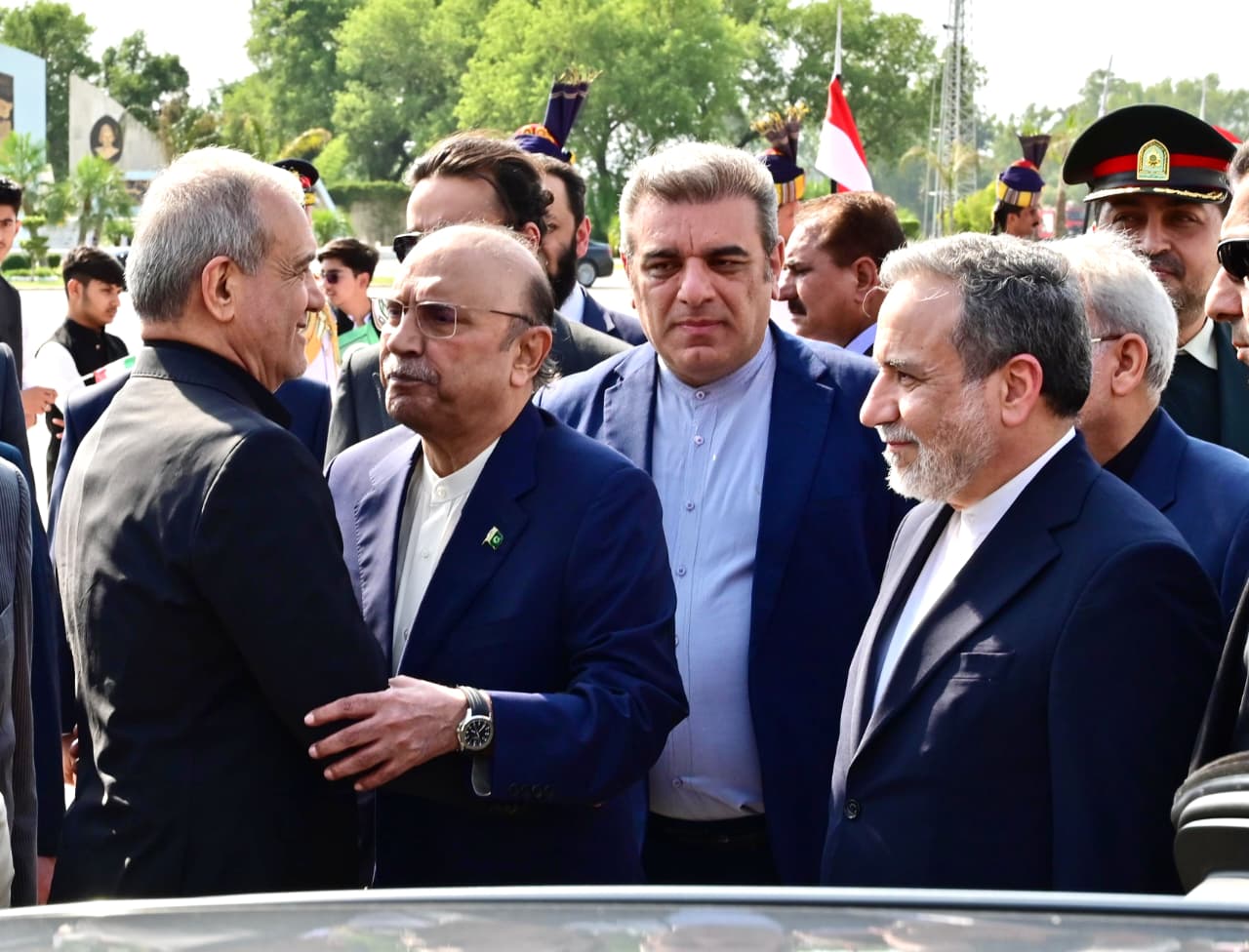
President Asif Ali Zardari receiving President of the Islamic Republic of Iran, Dr. Masoud Pezeshkian, upon his arrival at Nur Khan Airbase.

President of the Islamic Republic of Iran, Dr. Masoud Pezeshkian met President Asif Ali Zardari today at Aiwan-e-Sadr. The two leaders discussed bilateral relations, mainly regional peace and security, bilateral and regional connectivity, economic cooperation and other issues of mutual interest.

The Iranian President was accompanied by Foreign Minister Seyed Abbas Araghchi, Chief of the President’s Office Mr. Mohsen Haji Mirzaei, Minister of Interior Mr. Eskandar Momeni, Saeed Abbas Mousavi Chief of Political Affairs of President’s Office and Ambassador of Iran to Pakistan Mr. Reza Amiri Moghaddam.

From the Pakistani side Deputy Prime Minister and Foreign Minister Senator Mohammad Ishaq Dar and Chairman PPP Mr. Bilawal Bhutto Zardari, ex-Foreign Minister, Minister for Interior Syed Mohsin Raza Naqvi, Minister of State for Interior Talal Chaudhry, Chief Whip Senate Senator Saleem Mandviwala and Dr. Asim Hussain were present during the meeting.

President Zardari welcomed President Pezeshkian on his first State Visit to Pakistan after the recent conflict and noted that the visit reflects the longstanding brotherly relations between the two countries and a desire to stay together in good and bad times. He congratulated President Pezeshkian on the signing of the Islamabad Memorandum of Understanding and expressed the hope that the ongoing technical-level negotiations would culminate in permanent peace in the region.

The President reaffirmed Pakistan’s principled support for Iran’s peace, stability, national unity, sovereignty and territorial integrity. He stated that Pakistan has consistently opposed one-sided initiatives and has supported dialogue and diplomacy as the means to achieve a durable and sustainable solution to regional and global challenges. He also underscored Pakistan’s commitment to preserving the unity of the Muslim Ummah while maintaining strong fraternal relations with the countries of the Gulf region.

President Zardari once again expressed condolences on the martyrdom of His Eminence Ali Hosseini Khamenei and said that Pakistan would participate in his funeral.

President Pezeshkian thanked Pakistan for its positive and constructive efforts in support of peace and dialogue and appreciated the support extended by Pakistan during recent challenging circumstances. He said Iran attaches great importance to its relations with Pakistan and looks forward to further expanding cooperation in political, economic, security and regional matters.

President Zardari requested President Pezeshkian to convey his warm regards to His Eminence Ayatollah Seyed Mojtaba Hosseini Khamenei, the Supreme Leader of the Islamic Republic of Iran.


.